CBSE Syllabus Abroad: What Indian Families Need to Know
When Indian families move overseas, the CBSE syllabus, the standardized curriculum used by the Central Board of Secondary Education in India. Also known as Central Board of Secondary Education curriculum, it is designed for mobility, with content aligned to national exams like JEE and NEET, and recognized by universities worldwide. That’s why so many Indian parents choose CBSE schools even when living abroad — from Dubai to Singapore to the UK. It’s not just about familiarity; it’s about keeping options open for future exams, college applications, and even returning to India without a gap in learning.
But the CBSE board, India’s most widely adopted school board, known for its application-based learning and digital resources. Also known as Central Board of Secondary Education, it is recognized by universities in the US, Canada, Australia, and across Europe doesn’t automatically mean your child will thrive in a foreign classroom. Many international schools follow IB, Cambridge, or local curriculums that emphasize critical thinking over rote memorization. CBSE’s strength lies in its structure — clear textbooks, predictable exam patterns, and strong focus on science and math — but students transitioning from CBSE to IB or AP often need to adjust to more essay-based assessments and project work. That’s why some families opt for CBSE-affiliated international schools, which blend the best of both worlds: the rigor of CBSE with the global perspective of an international curriculum.
What about recognition? Universities in the UK, Australia, and Canada accept CBSE Class 12 results directly for undergraduate admissions — no need for extra bridging courses. The US is a bit more flexible: while CBSE is accepted, top universities often look for SAT/ACT scores and extracurriculars too. The Indian students abroad, a growing demographic relying on CBSE for academic continuity while living overseas benefit most when they pair their CBSE transcript with strong English skills, standardized test scores, and clear documentation of their curriculum’s equivalence.
If you’re thinking about moving, don’t assume CBSE is the default choice everywhere. Check if your destination country has a formal process for recognizing Indian board results. Some countries require a credential evaluation — like WES in Canada or UK ENIC in the UK. But here’s the good news: CBSE schools abroad are on the rise. From Abu Dhabi to Berlin, you’ll find CBSE-accredited institutions that follow the same textbooks, syllabus, and exam pattern as schools in Delhi or Mumbai. That means your child won’t fall behind, even if you relocate mid-year.
And if you’re worried about English fluency — don’t be. Many CBSE schools abroad teach English as the medium of instruction, and with resources like shadowing, daily conversation practice, and apps that build real speaking skills, your child can catch up fast. You don’t need perfect grammar to succeed — you need confidence, and CBSE’s focus on clear communication gives that foundation.
Below, you’ll find real stories, practical guides, and expert insights on how CBSE works overseas — from choosing the right school abroad to preparing for university applications with an Indian board background. Whether you’re moving next month or just starting to plan, this collection gives you the facts — no fluff, no hype, just what works.
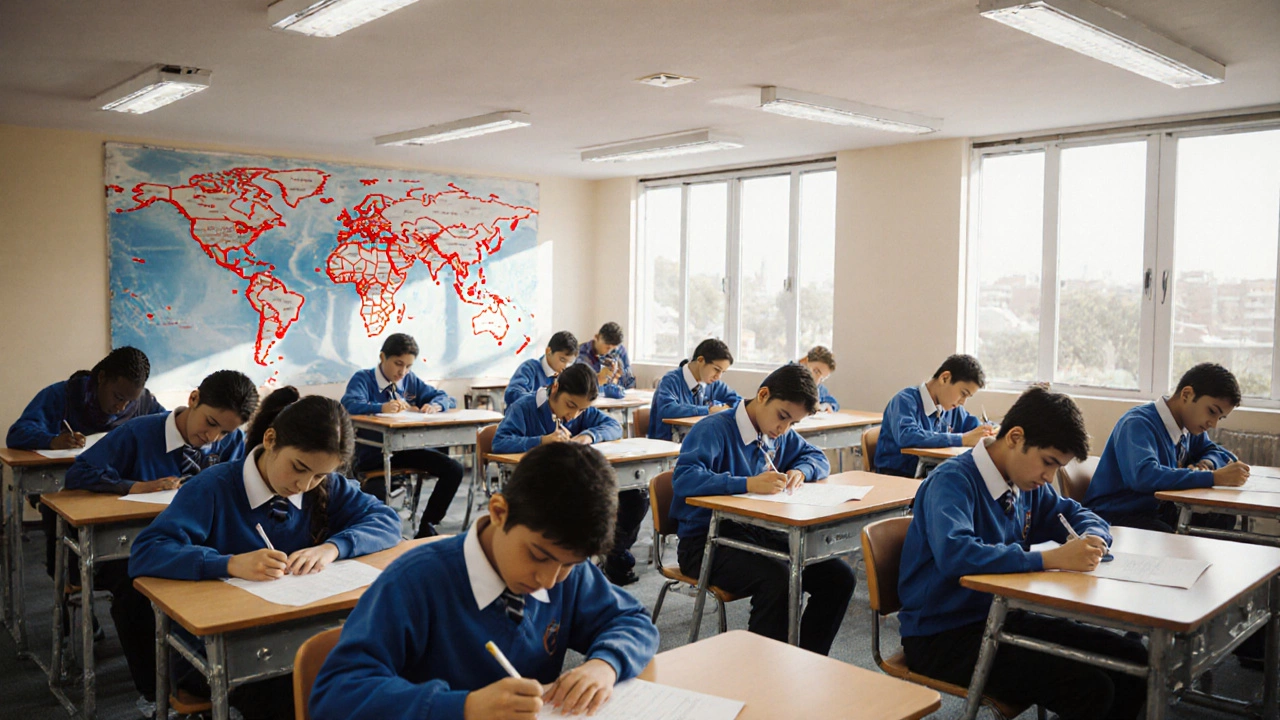
Is CBSE Outside India? Here’s Where It’s Actually Offered
CBSE is offered in over 25 countries through officially affiliated schools. Learn where CBSE schools exist outside India, how they compare to other curricula, and why families choose them for global education.
VIEW MORE