Coursera: Are Online Certificates Really Recognized?
When you hear Coursera, a leading platform offering online courses from top universities and companies. Also known as a MOOC provider, it lets anyone with an internet connection take classes from Stanford, Yale, Google, or IBM—without enrolling in a degree program. But here’s the real question: do employers care? Or is it just another digital badge collecting dust on your LinkedIn?
The answer isn’t yes or no—it’s "it depends." Coursera certificates aren’t degrees, but they’re not fluff either. Companies like Google, IBM, and Accenture actually hire people based on their Coursera credentials, especially in fields like data analysis, IT support, and project management. These aren’t random courses—they’re built by the same teams that train their own employees. And if you’re switching careers, a Coursera certificate can be the proof you need to get past the HR filter. Think of it like a portfolio for skills: if you can show you’ve done the work, you don’t always need a four-year diploma.
What makes Coursera different from other platforms? It partners with accredited institutions, so the content has academic weight. It also offers Google Career Certificates, industry-specific training programs designed by Google to prepare learners for entry-level tech jobs, and IBM Data Analyst Professional Certificate, a hands-on program that teaches SQL, Python, and data visualization using real-world datasets. These aren’t theory-heavy lectures—they’re built around projects you can show in interviews. And yes, some universities even accept Coursera credits toward degrees, though that’s still rare.
But not all certificates are equal. A certificate in "Introduction to Psychology" from a university might impress a hiring manager in HR—but a certificate in "Advanced Excel for Business" from a corporate partner? That’s a direct line to a job. The key is matching the credential to the role you want. Employers care less about the platform and more about the skills you can prove you’ve mastered. That’s why the posts below dive into exactly what’s working in 2025: which Coursera courses actually lead to jobs, how to list them on your resume, and which ones are worth the time (and money).
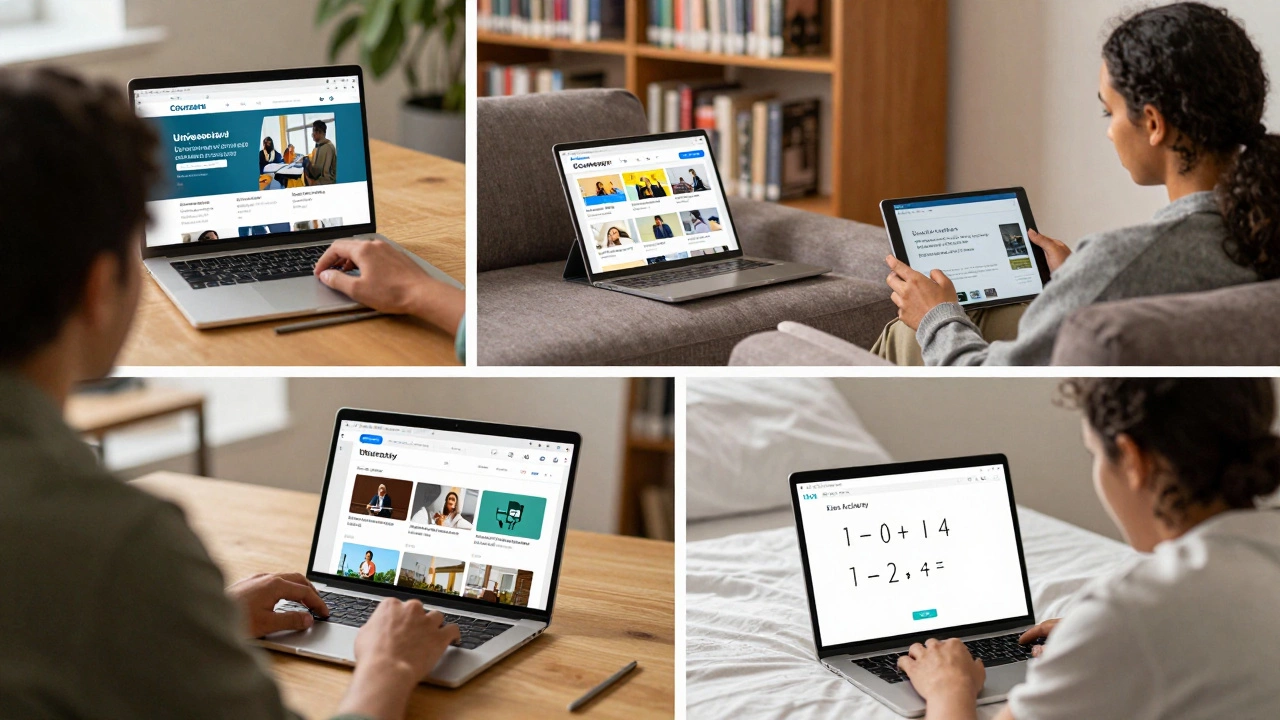
What Are the 4 Best Online Learning Platforms in 2026?
Discover the four most effective online learning platforms in 2026-Coursera, Udemy, edX, and Khan Academy-and learn which one fits your goals, budget, and learning style.
VIEW MORE
Who Is the Best for Online Classes? Top Platforms Compared for 2025
Discover the best online learning platforms for 2025 based on your goals - whether you're seeking certifications, career growth, or free foundational skills. Compare Coursera, Udemy, edX, Khan Academy, and LinkedIn Learning.
VIEW MORE