Cracking IIT JEE in 2 Years: A Realistic Roadmap for Success

IIT JEE 2-Year Preparation Simulator
Your Preparation Roadmap
Adjust inputs to see your projected readiness★ Focus Area
Start with NCERT basics in Physics and Chemistry. Don't rush into advanced problems yet.
✓ Key Action
Build a consistent daily routine. Aim for quality over quantity in problem solving.
⚠ Watch Out
Avoid resource hoarding. Stick to one standard book per subject initially.
Can you really crack the IIT JEE, a highly competitive engineering entrance exam in India, in just two years? The short answer is yes. But the longer answer requires a shift in how you view your time, your energy, and your strategy. Two years is not a sprint; it is a marathon with hurdles. It gives you enough runway to build deep conceptual foundations without burning out before the finish line.
If you are starting from scratch or picking up where you left off after Class 10, this timeline is actually ideal. You have the luxury of covering the entire NCERT curriculum thoroughly while gradually moving to advanced problem-solving techniques. Many students try to cram three years of content into twelve months, leading to stress and superficial learning. You don’t have that problem. Let’s break down exactly how to use these 730 days effectively.
The Power of the Two-Year Advantage
Why is two years better than one? Because mastery takes repetition. In a one-year prep cycle, students often rush through topics just to "complete" the syllabus. They solve problems once, get the right answer, and move on. This creates fragile knowledge that collapses under the pressure of the actual exam.
With two years, you can adopt a spiral learning approach. You cover a topic like Calculus in Year 1 at a basic level. Then, in Year 2, you revisit it with complex applications. This reinforcement builds neural pathways that make recall faster and more accurate during the test. You also have time to identify weak spots early. If you struggle with Electrostatics in Physics in Month 6, you have six more months to master it before the final push. That is a massive psychological and academic advantage.
Year 1: Building the Foundation (The Slow Start)
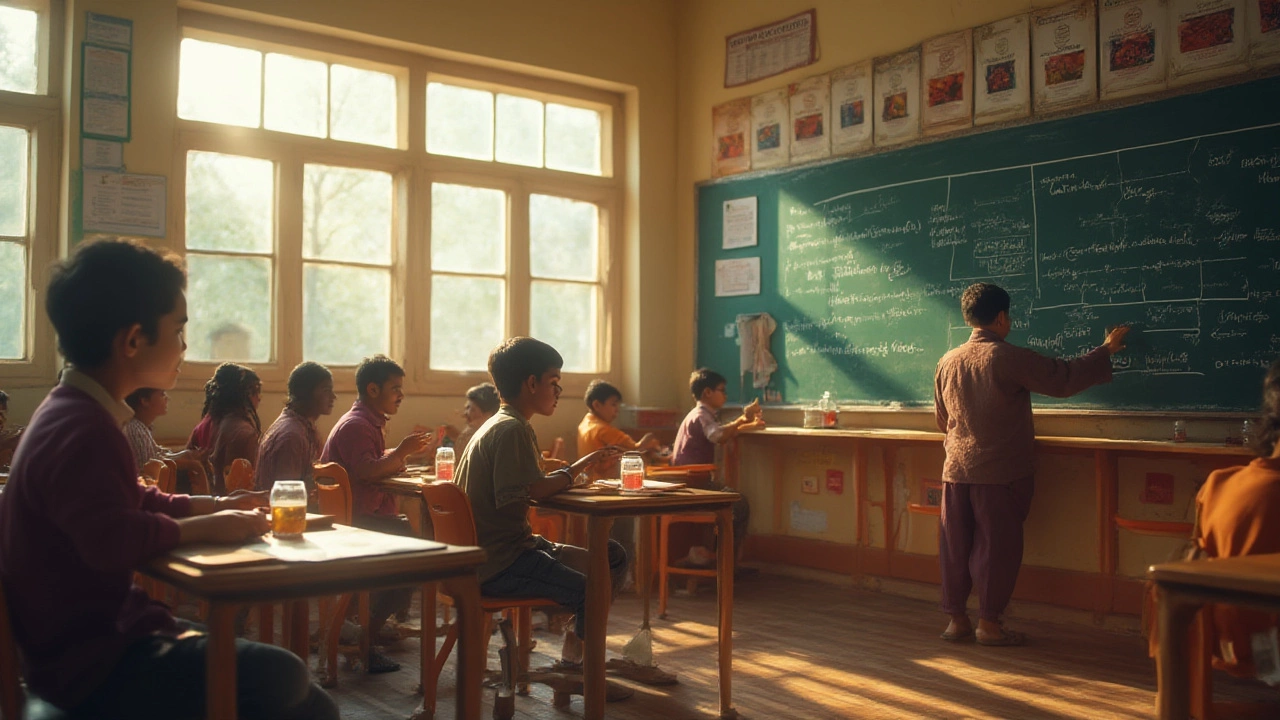
Your first year should be about depth, not speed. Do not jump into advanced coaching materials immediately. Stick to the source material. For Physics and Chemistry, the NCERT textbooks are non-negotiable. Read them like novels. Understand every derivation in Physics. Memorize every reaction mechanism in Organic Chemistry. In Mathematics, focus on algebra and trigonometry, as these form the backbone of Calculus later on.
- Physics: Focus on concepts. Why does an object fall? What is momentum conservation? Solve numerical problems step-by-step. Don't memorize formulas; derive them.
- Chemistry: Physical Chemistry requires calculation practice. Organic Chemistry needs visualization of structures. Inorganic Chemistry demands rote memory of trends and exceptions. Treat each branch differently.
- Mathematics: Speed comes from accuracy. Start by solving problems slowly but correctly. Use resources like RD Sharma or RS Aggarwal for practice before moving to higher-level books.
Avoid comparing yourself to peers who might be ahead in syllabus completion. Your goal in Year 1 is to ensure that when you see a question, you understand what it is asking, even if you cannot solve it yet. Join a reputable coaching institute or follow a structured online course to keep you accountable, but do not let the pace dictate your understanding.
Year 2: Integration and Application (The Fast Track)
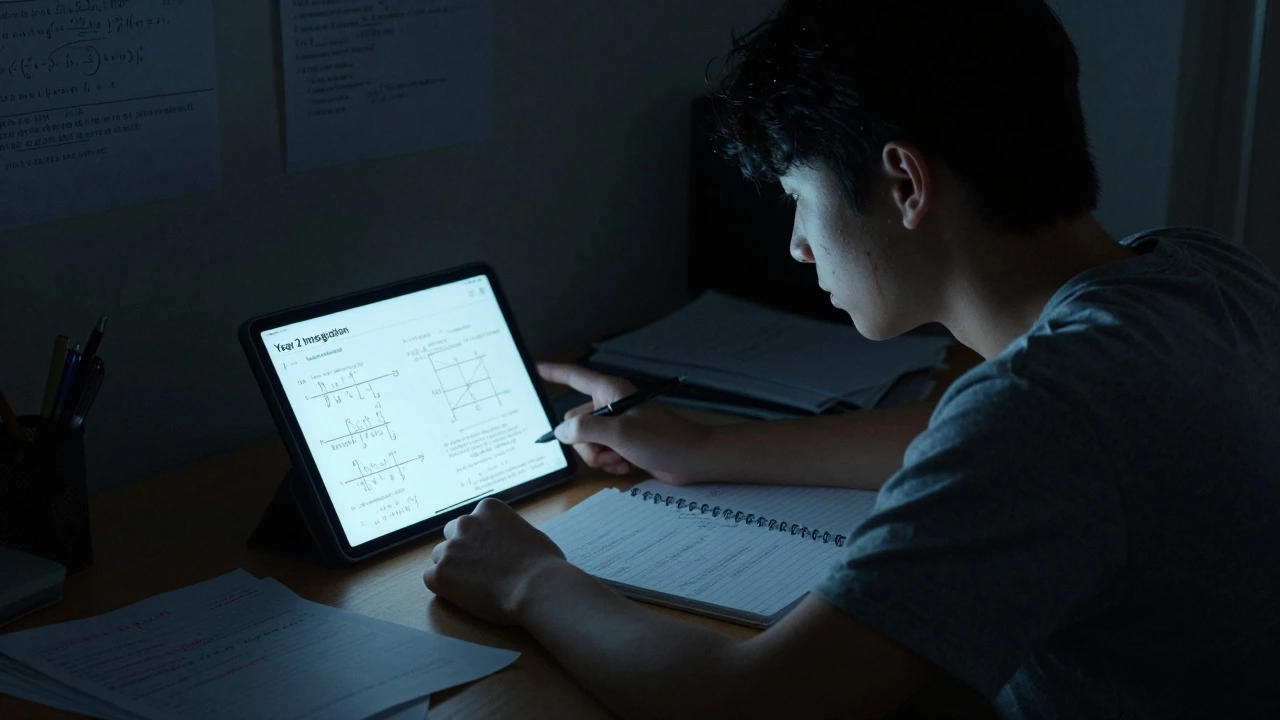
Once you enter your second year, the game changes. You now know the basics. Now you need to apply them under constraints. This is where you introduce mock tests. Start with chapter-wise tests. As the year progresses, move to full-length simulated exams.
The key here is analysis. Taking a test is useless if you don’t analyze it. For every wrong answer, ask why. Did you make a calculation error? Did you misread the question? Or did you lack the concept? Categorize your mistakes. Keep an error log. Review this log weekly. This habit alone can boost your score by hundreds of marks.
Incorporate previous years' questions (PYQs) from JEE Main and JEE Advanced. These questions reveal the pattern and difficulty level set by the National Testing Agency (NTA). Solving PYQs helps you recognize recurring themes and tricks. By the middle of Year 2, you should be taking a full mock test every weekend, simulating exact exam conditions-same time, same duration, no distractions.
Subject-Wise Strategy for Long-Term Prep
| Subject | Year 1 Focus | Year 2 Focus | Key Resources |
|---|---|---|---|
| Physics | Conceptual clarity, derivations | Multi-concept problems, speed | HC Verma, Irodov (selected) |
| Chemistry | NCERT mastery, reactions | Application-based questions, PYQs | OP Tandon, MS Chouhan |
| Mathematics | Algebra, Trigonometry basics | Calculus, Coordinate Geometry, integration | Cengage Series, Arihant |
Note that Chemistry is often called the "scoring subject." In a two-year plan, you can afford to spend extra time mastering Inorganic Chemistry through repeated revision. Since it relies heavily on memory, consistent exposure over two years ensures retention. Physics requires regular practice to maintain intuition. Mathematics demands daily engagement to keep problem-solving skills sharp.
Common Pitfalls to Avoid
Even with two years, many students fail to crack IIT due to strategic errors. Here are the biggest traps:
- Ignoring Health: Sleep deprivation kills productivity. Aim for 7-8 hours of sleep. Exercise regularly. A tired brain makes silly mistakes.
- Resource Hoarding: Don't buy ten different books for one subject. Pick one standard resource per topic and master it. Depth beats breadth.
- Skipping Basics: Never skip NCERT for Chemistry and Physics. Advanced books assume you know the basics. If you don’t, you’ll be lost.
- Comparison Anxiety: Everyone has a different starting point. Focus on your own progress curve. Weekly improvement matters more than peer ranking.
- Lack of Revision: Learning is temporary; revision is permanent. Schedule weekly and monthly revisions. Use spaced repetition techniques to retain information longer.
Another critical mistake is neglecting JEE Main while focusing only on JEE Advanced. Remember, JEE Main scores determine your eligibility for Advanced and are crucial for NITs and other state colleges. Balance your preparation so you excel in both. JEE Main tests speed and accuracy on fundamental concepts, while JEE Advanced tests depth and multi-concept application.

Maintaining Momentum and Mental Resilience
Two years is a long time. Motivation will wane. Discipline must take over. Create a routine that includes breaks, hobbies, and social interaction. Burnout is real. If you feel overwhelmed, take a day off. Recharge. Talk to mentors or counselors if needed.
Set small, achievable goals. Instead of "Finish Mechanics," aim for "Solve 10 problems on Newton's Laws today." Celebrate small wins. Track your progress visually. Seeing your consistency grow over months provides immense psychological reward.
Connect with a study group or find a study buddy. Explaining concepts to others reinforces your own understanding. However, ensure the group is productive and not a distraction zone. Limit social media usage during study hours. Use apps that block distracting sites during focused work sessions.
Final Months: The Polish Phase
In the last six months before the exam, stop learning new topics. Focus entirely on revision and mock tests. Analyze your performance trends. Identify which chapters yield the most marks for the least effort and prioritize them. Simultaneously, tackle your weakest areas with targeted practice.
Refine your exam strategy. Learn to guess intelligently. Manage time during the test. Practice skipping difficult questions and returning to them later. Build stamina by taking consecutive mock tests. By the time you sit for the actual exam, it should feel like just another Saturday morning practice session.
Is 2 years enough to prepare for IIT JEE from scratch?
Yes, two years is sufficient and often ideal for building a strong foundation. It allows for thorough coverage of the NCERT syllabus, multiple rounds of revision, and extensive practice with mock tests without the extreme pressure of a one-year timeline.
What is the best study schedule for a 2-year IIT JEE prep?
Aim for 6-8 hours of focused study daily in Year 1, increasing to 10-12 hours in Year 2. Include specific blocks for Physics, Chemistry, and Mathematics. Dedicate weekends to mock tests and detailed analysis. Ensure regular breaks and sleep.
Should I join a coaching institute for 2-year preparation?
Coaching provides structure, peer competition, and expert guidance, which can be beneficial. However, self-study with disciplined planning and quality resources is also effective. Choose based on your learning style and ability to stay self-motivated.
How important are NCERT books for IIT JEE?
NCERT books are crucial, especially for Chemistry and Physics. They form the basis of the syllabus and many direct questions in JEE Main. Mastering NCERT ensures you have the foundational knowledge required for advanced problem-solving.
When should I start taking mock tests?
Start with chapter-wise tests in the second half of Year 1. Begin full-length mock tests in the first half of Year 2. Regular mock tests help improve speed, accuracy, and time management skills essential for the actual exam.