Cracking IIT JEE Without Coaching: A Realistic Self-Study Guide

JEE Self-Study Success Estimator
Enter your daily study routine details to estimate your potential JEE Main score and receive personalized improvement suggestions.
Estimated JEE Main Score (out of 300)
Subject-wise Breakdown:
Personalized Advice:
* This is an estimation tool based on general patterns. Actual performance depends on many factors including concept clarity, problem-solving speed, and exam-day performance.
Can you crack the IIT JEE is India's most competitive engineering entrance exam without spending lakhs on coaching? The short answer is yes. But the longer answer requires grit, discipline, and a strategy that beats the noise of peer pressure. Every year, hundreds of students secure top ranks through self-study. They don't have access to fancy classrooms or daily doubt-clearing sessions. What they do have is a clear roadmap and the ability to learn independently.
If you are considering this path, you need to understand what you are up against. The Joint Entrance Examination (JEE) tests your conceptual depth in Physics, Chemistry, and Mathematics. It rewards those who can apply theory to complex problems quickly. This article breaks down exactly how to achieve that on your own, using resources available to anyone with an internet connection and a library card.
The Reality Check: Why Most Fail at Self-Study
Before we dive into the 'how', let's look at the 'why' behind the failure rate. Self-study isn't just about skipping class; it's about replacing structure with self-discipline. In a coaching center, the schedule is forced upon you. You show up, you listen, you solve. At home, you decide when to start. That freedom is dangerous.
The biggest trap is inconsistency. One day you study for ten hours, the next day you scroll through social media because you feel 'behind'. Another major pitfall is resource hoarding. Students download fifty PDFs but master none of them. To succeed, you must treat your preparation like a full-time job. If you can't commit eight to ten focused hours a day, self-study might not be the right fit yet.
Building Your Core: The NCERT Foundation
Your journey starts with one book series: NCERT textbooks are the national curriculum standard for Indian high schools. Many students dismiss these as too simple for JEE Advanced. That is a mistake. For JEE Main, especially in Chemistry, NCERT is the bible. Even for Physics and Math, the concepts here are the building blocks.
- Chemistry: Read every line of Class 11 and 12 NCERT Chemistry. Memorize reactions, exceptions, and biological applications. JEE Main questions often come directly from these pages.
- Physics: Use NCERT to understand definitions and derivations. Don't stop there, but ensure your basics are rock solid before moving to advanced texts.
- Mathematics: Solve all examples and exercises. These problems help you grasp the fundamental logic required for higher-level problem-solving.
Once you finish a chapter in NCERT, test yourself. If you can explain the concept to someone else without looking at the book, you are ready to move on. If not, re-read. There is no shortcut to understanding.
Selecting the Right Reference Books
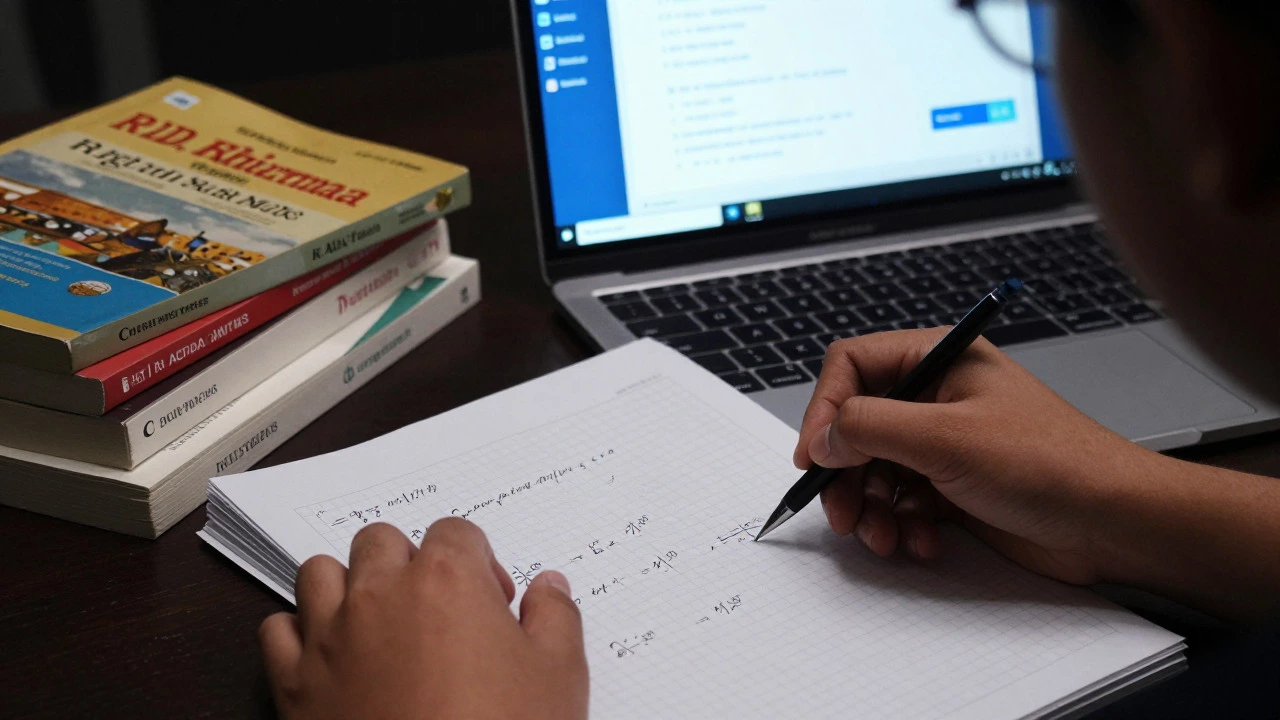
After NCERT, you need books that challenge you. You don't need a library; you need three to four key titles per subject. Stick to them. Master them. Here is a proven stack for self-learners:
| Subject | Concept Building | Problem Solving |
|---|---|---|
| Physics | H.C. Verma (Concepts of Physics) | D.C. Pandey or I.E. Irodov (for Advanced) |
| Chemistry | O.P. Tandon (Physical & Organic) | N.A. (Focus on NCERT + Previous Year Questions) |
| Mathematics | R.D. Sharma or Cengage Series | Arihant Skills in Mathematics |
Note that H.C. Verma is legendary for a reason. It bridges the gap between school physics and competitive exam level. For Mathematics, the Cengage series by G Tewani is comprehensive but dense. Take your time with it. Do not rush through problems. Quality of practice beats quantity every time.
Leveraging Digital Resources Effectively
In 2026, you are not alone in your learning. The digital ecosystem for JEE preparation has matured significantly. You can access lectures from top educators for free or at a low cost. However, passive watching is not learning. You must engage actively.
Use platforms like Khan Academy for initial concept clarification. Their visual explanations for Calculus and Mechanics are excellent. For more India-specific content, YouTube channels dedicated to JEE offer detailed playlists. Look for teachers who explain the 'why' behind formulas, not just the 'how'.
Another powerful tool is online test series. You cannot crack JEE without simulating exam conditions. Platforms like Allen Digital, Resonance, or even free options on Unacademy provide mock tests. Take them weekly. Analyze every mistake. Was it a calculation error? A conceptual gap? Or time management? Track this data in a notebook. This analysis is where the real learning happens.
Creating a Sustainable Study Schedule
A random study routine leads to burnout. You need a timetable that balances intensity with recovery. Here is a sample framework for a non-coaching student:
- Morning (3 hours): Tackle the hardest subject first. Fresh mind equals better retention. Usually, this is Physics or Mathematics.
- Mid-Day (2 hours): Review notes from the morning session. Solve related problems. Active recall strengthens memory.
- Afternoon (2 hours): Chemistry. Since it involves memorization, break it into smaller chunks. Focus on one topic, like Electrochemistry, until it sticks.
- Evening (3 hours): Practice problems. Mix easy, medium, and hard questions. Simulate exam pressure by timing yourself.
- Night (1 hour): Light revision. Glance over formulas and reaction mechanisms. Plan the next day’s targets.
Include one full rest day per week. Your brain needs downtime to consolidate information. Use this day for hobbies, exercise, or sleep. Avoid studying entirely on this day to prevent mental fatigue.
Mastering Time Management and Exam Strategy
Knowing the material is half the battle. The other half is answering correctly under pressure. JEE is a negative-marking exam. Guessing can destroy your rank. Develop a strategy for attempting papers:
- Sectional Allocation: Decide how much time to spend on each section. For example, 60 minutes for Physics, 60 for Chemistry, 90 for Math. Adjust based on your strength.
- Two-Pass Approach: First, solve all questions you know instantly. Mark the difficult ones for later. This ensures you secure easy marks and build confidence.
- Elimination Technique: In multiple-choice questions, eliminate obviously wrong options. Even if you aren't sure of the right answer, narrowing down choices increases your probability of success.
Practice this strategy in every mock test. Consistency in approach reduces anxiety during the actual exam.
Staying Motivated and Avoiding Isolation
Self-study can feel lonely. You miss out on the camaraderie of a classroom. To combat this, find a study partner or join online communities. Discord servers and Reddit forums for JEE aspirants are active spaces where you can discuss doubts and share resources.
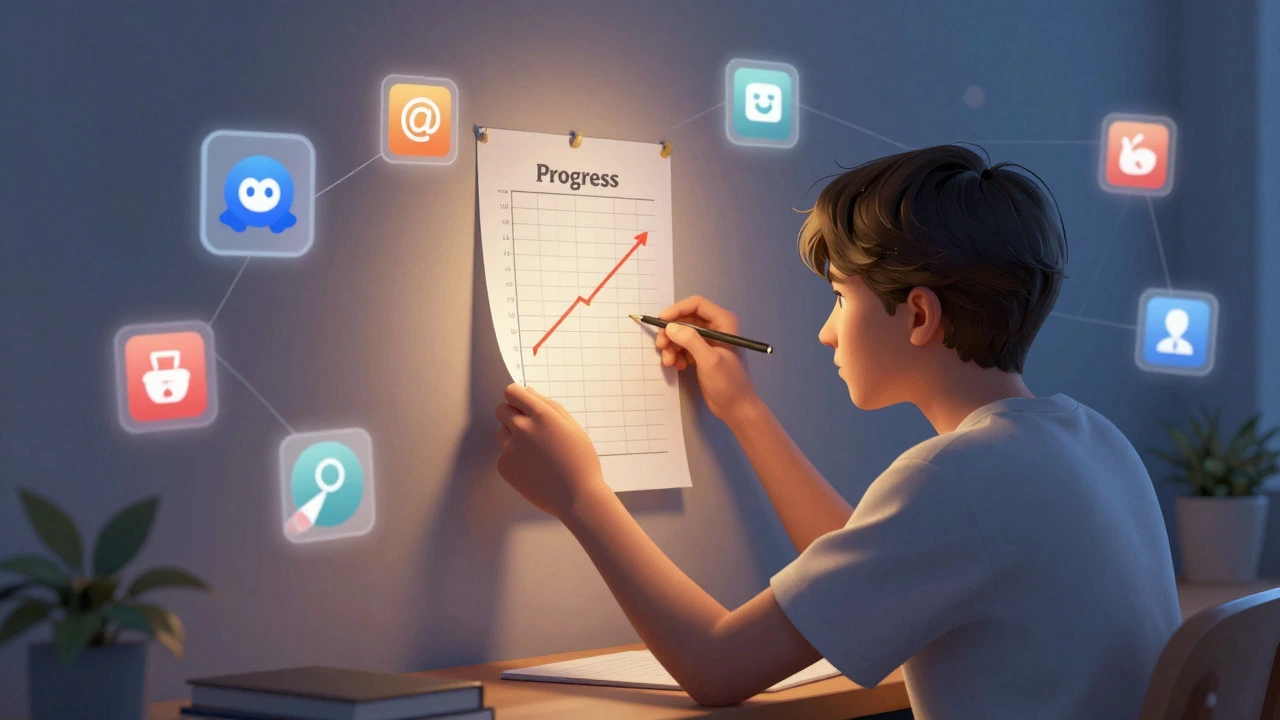
Also, track your progress visually. Create a chart showing your mock test scores over time. Seeing improvement, even small, boosts motivation. Remember why you started. Visualize your goal-whether it's getting into IIT Bombay or simply proving to yourself that you can achieve it.
Is it possible to get a top 1000 rank in JEE Advanced without coaching?
Yes, it is possible. Several toppers have achieved this through rigorous self-study. The key is mastering concepts deeply rather than superficially covering many topics. Consistent practice with previous year questions and strong fundamentals in NCERT are critical factors.
Which subjects are easiest to self-study for JEE?
Chemistry is often considered the most manageable for self-study because it relies heavily on factual knowledge and standard procedures found in NCERT. Physics requires strong visualization skills, which can be developed through videos. Mathematics demands consistent practice and logical thinking, making it challenging but rewarding for disciplined learners.
How important are previous year questions (PYQs)?
PYQs are essential. They reveal the pattern of the exam, the difficulty level, and frequently tested concepts. Solving at least the last 10 years of JEE Main and Advanced papers helps you understand the examiner's mindset and improves your speed and accuracy.
Should I take a crash course if I am preparing on my own?
A crash course can be useful for revision and solving specific doubts, but it should not replace your primary study method. Use it selectively for weak areas. Ensure that the course provides structured notes and regular tests to complement your self-study efforts.
What is the biggest mistake self-students make?
The biggest mistake is lack of consistency and poor time management. Many students start strong but lose momentum due to distractions or burnout. Another common error is neglecting mock tests, which are crucial for developing exam temperament and identifying gaps in preparation.