How to Speak English More Fluently and Confidently
English Fluency Progress Tracker
Your Fluency Journey
Streak Progress
Daily Practice Checklist
My Progress Today
My Progress Journal
Want to speak English without pausing, stumbling, or second-guessing every word? You’re not alone. Millions of people around the world know the grammar, understand the vocabulary, but still freeze when it’s time to talk. The problem isn’t your brain-it’s your habit. Fluency isn’t about knowing more words. It’s about training your mouth, your ears, and your mind to work together without stopping.
Stop memorizing. Start mimicking.
Most people learn English by studying lists of words and rules. That’s useful for tests, but it doesn’t help you speak. Real fluency comes from repetition-not memorization. Listen to native speakers. Not just once. Not just in class. Every day.
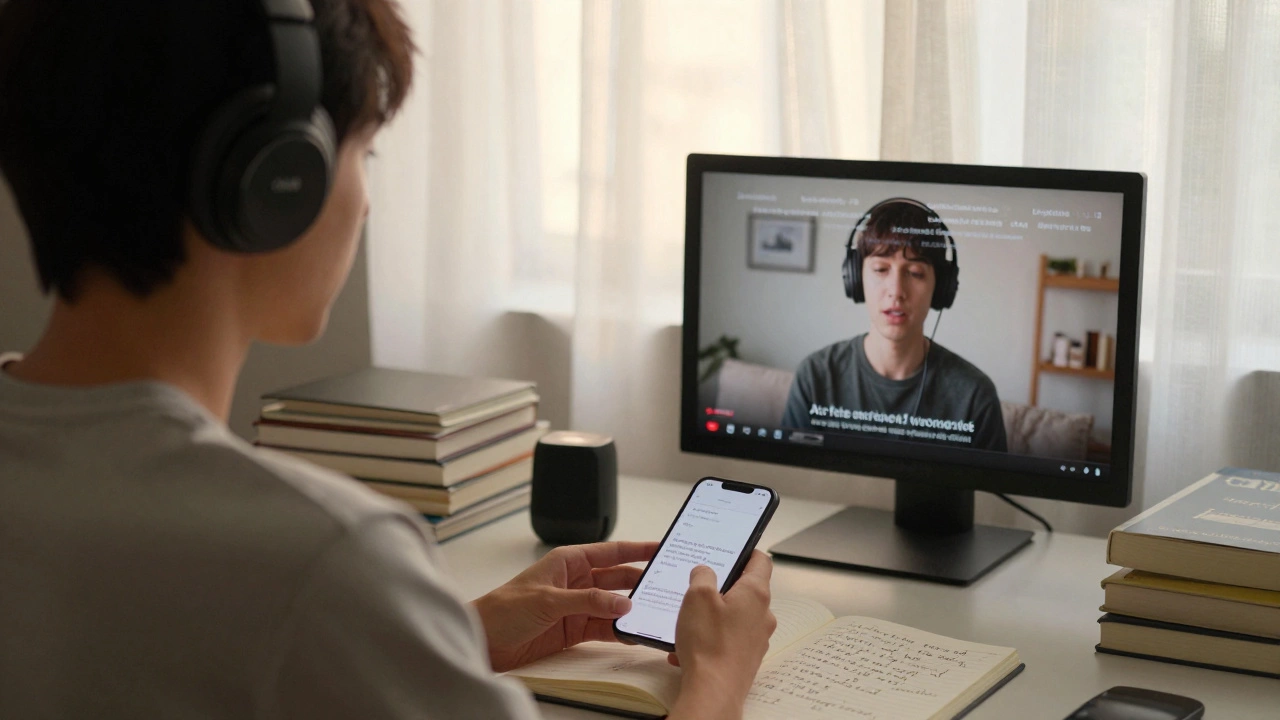
Find a short clip from a podcast, YouTube video, or movie. Something that’s 30 to 60 seconds long. Play it. Listen closely. Then pause and repeat exactly what they said. Copy their rhythm, their pauses, their tone. Don’t worry if it sounds weird at first. That’s normal. Your mouth isn’t used to making those sounds.
Do this for 10 minutes a day. In two weeks, you’ll notice your tongue moves differently. In a month, you’ll start thinking in phrases, not single words. This is called shadowing. It’s used by professional interpreters and actors. And it works faster than any textbook.
Speak before you’re ready
You don’t need to be perfect to speak. You just need to start. The biggest barrier isn’t language-it’s fear. Fear of sounding stupid. Fear of making mistakes. But here’s the truth: every native speaker makes mistakes. Even the ones who sound flawless.
Find someone to talk to. It doesn’t have to be a teacher. It could be a friend, a language partner, even a chatbot. The goal isn’t to be right. The goal is to be heard. Say something simple: “I’m trying to get better at speaking.” Say it out loud. Even if you’re alone.
Record yourself. Then listen. You’ll hear awkward pauses, weird pronunciations, filler words like “um” and “uh.” That’s okay. You’re not trying to sound like a news anchor. You’re trying to sound like someone who communicates. Every time you speak, you’re building muscle memory. The more you do it, the less you think about it.
Change your environment
Your brain learns from what it’s exposed to. If you only hear English in class, your brain treats it like a subject-not a tool. But if you live in English, your brain starts using it automatically.
Switch your phone, social media, and streaming apps to English. Watch TV shows without subtitles. Listen to music and try to write down the lyrics. Read headlines while you have coffee. Don’t translate in your head. Just let the meaning sink in.
Try labeling things around your house. “Fridge,” “door,” “window.” Say them out loud when you pass them. These tiny habits rewire your brain. Instead of thinking “I need to speak English,” you start thinking “I speak English.”

Focus on communication, not grammar
Grammar matters. But not when you’re trying to speak. If you’re waiting to check if your verb tense is perfect before saying something, you’ll never say anything. Fluency means getting your point across-even if it’s messy.
People don’t notice small mistakes. They notice if you’re trying. If you say “I go to store yesterday,” most native speakers will still understand you. They’ll even help you fix it. But if you stay silent, no one can help.
Learn a few key phrases that cover 80% of daily conversations: “Can you repeat that?” “What do you mean by…?” “I’m not sure, but I think…” These are your safety nets. Use them. They make you sound more confident, not less.
Build a speaking routine
Fluency doesn’t come from one big lesson. It comes from small, daily actions. Here’s a simple routine that works for most people:
- 10 minutes of shadowing (repeat after a native speaker)
- 5 minutes speaking out loud about your day (record it)
- 10 minutes listening to English without translating
- 1 new phrase you use in conversation that day
Do this for 21 days. That’s the magic number. It’s not a rule. It’s a pattern. After three weeks, speaking starts to feel normal. Not easy-but normal.
Find your tribe
You don’t have to do this alone. Look for local or online groups where people are learning to speak English. Not for tests. Not for grades. Just to talk. Places like Toastmasters, language exchange meetups, or Discord servers focused on real conversation.
When you’re with people who are also trying, you stop feeling judged. You start feeling supported. And that changes everything. You’ll hear others make mistakes. You’ll laugh. You’ll help them. And they’ll help you. That’s how real progress happens.
Track your progress, not perfection
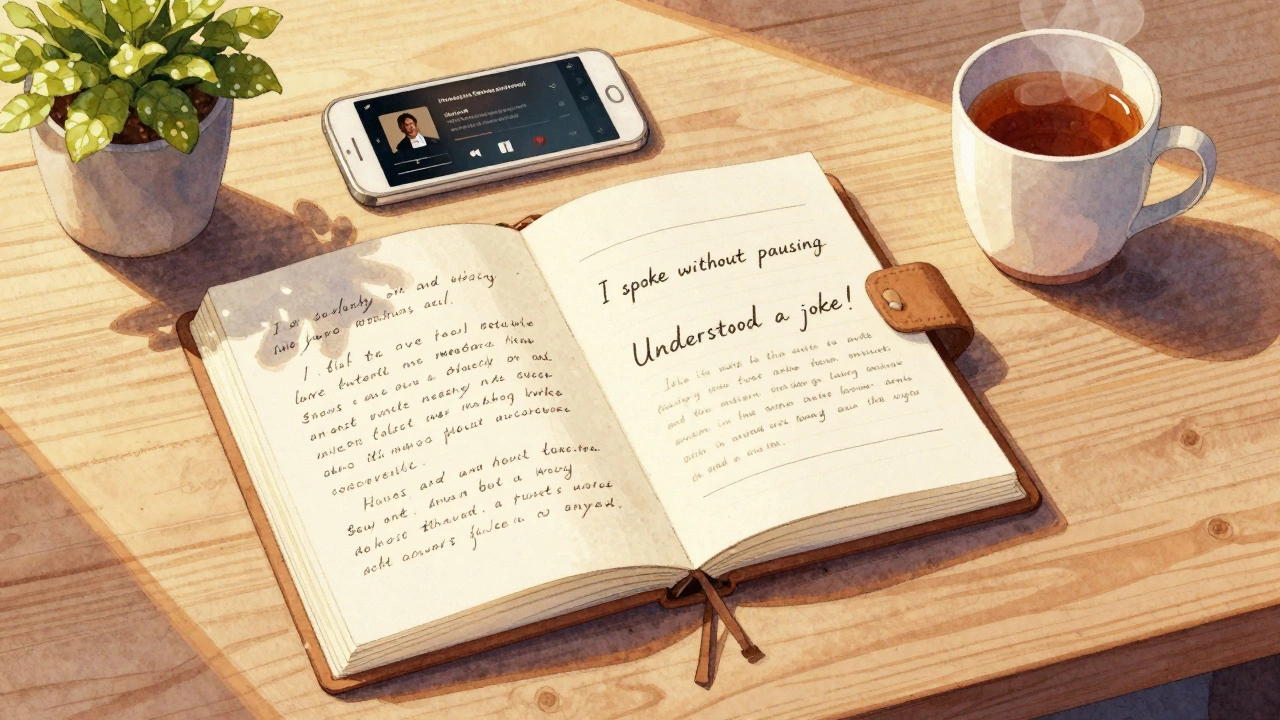
Don’t measure yourself by how many words you know. Measure yourself by how often you speak without stopping. Did you have a 3-minute conversation without needing to pause? That’s a win. Did you understand a joke in a movie? That’s a win. Did you ask for help without feeling embarrassed? That’s a win.
Keep a small journal. Write down one thing you said that you’re proud of. Not because it was perfect. Because you did it. Over time, that list will grow. And you’ll see how far you’ve come.
Fluency isn’t a destination
You won’t wake up one day and suddenly sound like a native speaker. And that’s okay. Fluency isn’t about sounding like someone else. It’s about being understood. It’s about expressing your thoughts without fear. It’s about saying what you mean, when you mean it.
Every person who speaks English fluently started exactly where you are. They didn’t have better brains. They just kept going. Even when it felt slow. Even when they felt silly. Even when they made mistakes.
You don’t need to be perfect. You just need to keep talking.