What is the Hardest Country to Study In? A Realistic Guide

Study Abroad Difficulty Estimator
Select your profile traits below to see which countries pose the greatest challenge for you. The tool analyzes four pillars: Academic Rigor, Bureaucracy, Cultural Integration, and Financial Survival.
Your Difficulty Scores
Recommendation
You’ve picked your major. You’ve saved up some cash. But before you book that one-way ticket, you need to ask a harder question: what is the hardest country to study in? It’s not just about which university has the toughest exams. It’s a messy mix of visa nightmares, social isolation, financial drain, and academic pressure that can break even the most prepared students.
Most rankings look at tuition fees or graduation rates. That’s useless if you’re crying in a dorm room because you can’t find a part-time job or understand your professor’s accent. The "hardest" place depends on what breaks you faster: money, loneliness, bureaucracy, or pure intellectual grind.
Why "Hardest" Is Subjective (And How to Define It)
There is no single answer. For an engineering student from India, Japan might be hard because of the language barrier. For an American student, it might be Switzerland because of the cost. To figure out where you will struggle, we need to break down the four pillars of study abroad stress.
- Academic Rigor: Does the grading system punish failure harshly?
- Bureaucracy & Visas: Can you legally work? Will your visa expire mid-semester?
- Cultural Integration: Do locals actually talk to international students, or do you stay in a bubble?
- Financial Survival: Can you afford rent without working illegal hours?
If you fail two of these, you are likely in a "hard" zone. Let’s look at the countries that consistently trip people up.
Japan: The Cultural and Linguistic Wall
Japan is often cited as one of the most difficult places for international students who don’t speak fluent Japanese. Even with English-taught programs, daily life requires Japanese. The academic culture is rigid. Attendance is mandatory. Group projects require consensus-building skills that many Western students lack.
The biggest hurdle isn’t the coursework; it’s the silence. If you aren’t fluent, you miss the nuance. Professors rarely explain things twice. If you fall behind in week three, catching up by week ten feels impossible. Plus, the part-time job market is competitive and heavily favors native speakers. You might end up washing dishes in a convenience store for minimum wage while your classmates network in Japanese business circles.
Switzerland: The Financial Trap
Switzerland offers incredible quality of life and low tuition fees compared to the US or UK. Sounds great, right? Wrong. The cost of living is brutal. Rent in Zurich or Geneva can eat 60% of a typical student budget. And here’s the kicker: non-EU/EFTA students face strict restrictions on working.
You cannot simply pick up shifts at a café. Your work permit is tied to your studies, and you’re limited to 15 hours per week during term time. This means you need substantial savings upfront. If you run out of money, you can’t just "work more." You have to drop out or go home. The academic standards at institutions like ETH Zurich are also notoriously high. Failure rates in first-year STEM programs can exceed 30%. It’s a high-stakes environment where one bad semester can derail your funding.
South Korea: The Pressure Cooker
South Korea boasts top-tier tech infrastructure and globally recognized universities like Seoul National University. But the academic culture is intense. Competition is fierce. Students often study late into the night, fueled by coffee and anxiety. The hierarchy between seniors and juniors, professors and students, is deeply ingrained.
For international students, the language barrier is significant outside of English-only tracks. Even in English programs, socializing with Korean peers requires navigating complex etiquette rules. Dating, friendship, and networking all come with unspoken scripts. If you violate them, you get ostracized quietly. There’s no dramatic confrontation-just a slow fade into loneliness.

Germany: The Bureaucratic Maze
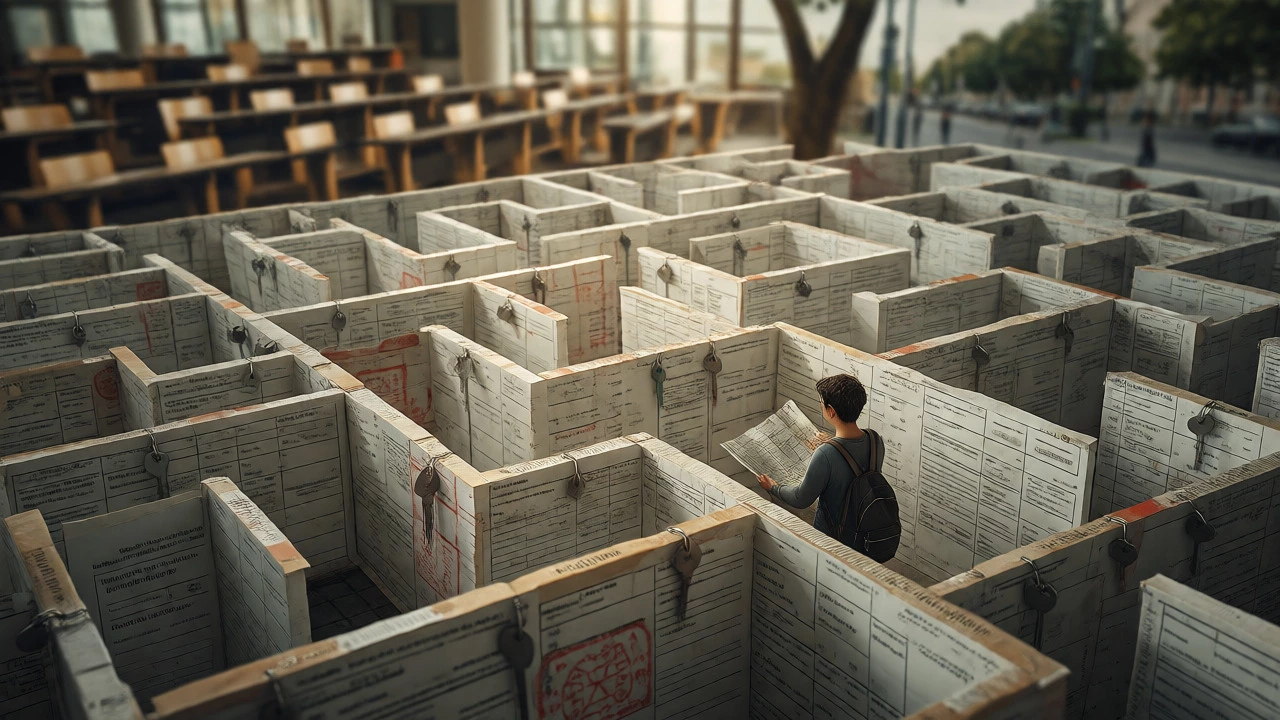
Germany is free (or nearly free) for international students at public universities. This attracts millions. But getting there is half the battle. The visa process is slow. You need proof of funds (the "Sperrkonto") blocked in a German bank account. Opening a bank account takes weeks. Finding housing in cities like Munich or Berlin is a nightmare due to severe shortages.
Once you’re there, the academic freedom is double-edged. No one checks if you attend class. No one reminds you of deadlines. You must self-manage everything. Many students drift through semesters, failing exams because they didn’t realize how much independent reading was required. The dropout rate for international students in Germany is higher than many expect, partly due to this lack of hand-holding and partly due to the complexity of recognizing prior credits.
United Kingdom: The Cost-Benefit Crisis
The UK is popular for a reason: short master’s degrees (one year). But post-Brexit, the landscape has shifted. Tuition fees for international students have skyrocketed. Living costs in London are among the highest in Europe. While you can work 20 hours a week, wages haven’t kept pace with inflation.
The real hardness here is the "post-study" uncertainty. The Graduate Route visa allows you to stay and work for two years after graduation, but finding a sponsor for a long-term Skilled Worker Visa is tough. Many students graduate with debt and no clear path to residency. The academic pace is fast-you have less time to adjust culturally before exams hit. If you’re shy, you’ll feel left out because British socializing often revolves around pubs and inside jokes that take months to crack.
Comparison: Which Hardship Hits You?
To help you decide, here’s a breakdown of the primary friction points for each country. Use this to match against your personal strengths.
| Country | Primary Challenge | Visa Work Limits | Language Barrier | Cost of Living |
|---|---|---|---|---|
| Japan | Social isolation & Language | Strict (28 hrs/wk) | High | Moderate-High |
| Switzerland | Financial Pressure | Very Strict (15 hrs/wk) | Low-Moderate | Extreme |
| South Korea | Academic Stress & Hierarchy | Moderate | High | Moderate |
| Germany | Bureaucracy & Self-Discipline | Permitted (120 full days) | Moderate | Moderate |
| UK | High Costs & Job Market | 20 hrs/wk | Low | High |
How to Survive the "Hard" Countries
If you’re set on one of these destinations, don’t go in blind. Here’s how to mitigate the risks.
- Pre-Study the Culture: Don’t just learn phrases. Learn how to apologize, how to refuse politely, and how to make small talk. In Japan and Korea, knowing the "right" way to bow or exchange cards saves you from awkwardness.
- Secure Funding Early: For Switzerland and the UK, have six months of living expenses ready in cash. Don’t rely on scholarships alone until they’re in your bank account.
- Join International Clubs First: It sounds counterintuitive, but starting with other expats gives you a support network. Then, branch out to local meetups. Trying to integrate immediately can lead to burnout.
- Hire a Local Agent for Housing: In Germany and Japan, renting as a foreigner is discriminatory and complex. Paying a broker fee is worth it to avoid scams and endless paperwork.
The Hidden Difficulty: Mental Health
No ranking measures loneliness. Studies show that international students experience higher rates of depression and anxiety than domestic students. Why? Because you’re constantly performing. Every interaction is a test of your language skills. Every mistake feels public.
In countries like South Korea and Japan, mental health stigma is still strong. Admitting you’re struggling can feel like admitting weakness. In Europe, the system is better, but waitlists for counseling can be long. If you have a history of mental health issues, choose a country with accessible, affordable healthcare. Australia and Canada, for example, offer better public health access for students than the US or Switzerland.
Is It Worth It?
Yes, if you know why you’re going. Studying in a "hard" country builds resilience. You learn to navigate ambiguity, solve bureaucratic puzzles, and communicate across cultures. These are soft skills employers love.
But don’t romanticize the struggle. If you hate cold weather, Scandinavia is hard. If you hate formalities, Japan is hard. If you hate risk, Switzerland is hard. Pick the hardship you can tolerate. That’s the secret to surviving-and thriving-abroad.
Which country has the highest dropout rate for international students?
While exact global data varies, countries with high academic rigidity and weak support systems, such as parts of Southern Europe and some Asian nations with rigid grading curves, see higher dropout rates. However, precise statistics are often obscured by students taking leave rather than officially dropping out. Germany and France report notable attrition among non-EU students due to language and administrative hurdles.
Is it harder to study in Asia or Europe?
It depends on your background. For Westerners, Asia is generally harder due to language barriers, cultural distance, and stricter social norms. For Asians moving to Europe, the challenge is often financial management and navigating individualistic social structures. Neither is universally "harder," but the type of stress differs significantly.
Can I work full-time while studying in any of these countries?
Rarely. Most OECD countries limit student work hours to 20-24 hours per week during term time to ensure academic focus. Switzerland is stricter (15 hours), while Germany allows 120 full days or 240 half days per year. Full-time work is usually only permitted during scheduled vacation periods.
Does learning the local language make studying easier?
Absolutely. Even if your classes are in English, speaking the local language reduces daily friction, helps with part-time jobs, and accelerates social integration. In Japan and South Korea, basic proficiency is often the difference between isolation and community. In Europe, it opens doors to cheaper housing and better service interactions.
Are scholarships available in expensive countries like Switzerland?
Yes, but they are highly competitive. The Swiss Government Excellence Scholarships are prestigious but cover only a select number of students. Most international students in Switzerland pay out-of-pocket, which is why the financial burden is considered one of the hardest aspects of studying there.