Are Humans Naturally Competitive? The Psychology Behind High-Stakes Exams

Competitive Mindset Audit
Are you using competition as a turbocharger for growth, or is it causing your engine to overheat? Answer the following questions to find out your current mindset profile.
Loading question...
Your Mindset Analysis
Current Driver
Risk Factor
Recommended Shift:
The Biological Blueprint of Competition
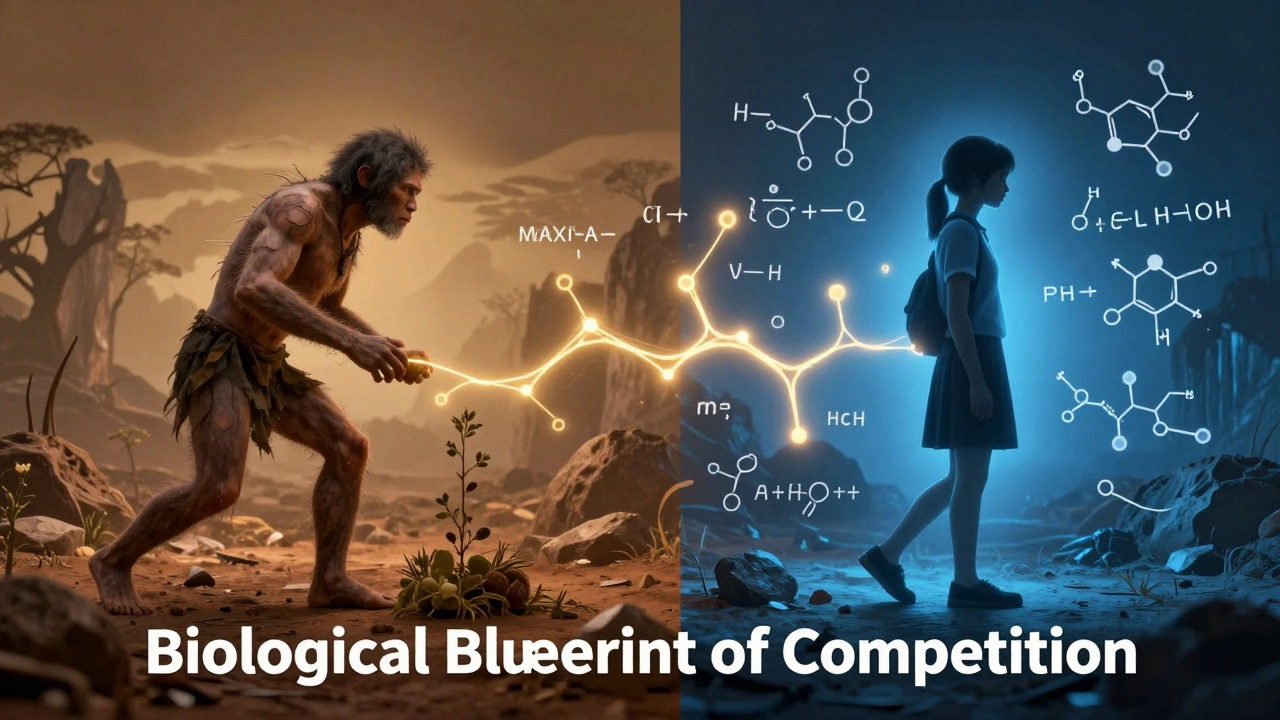
To get a real answer, we have to look at our ancestors. Competition isn't just about ranking systems or gold medals; it's a survival mechanism. In the early days of human history, resources like food, shelter, and mates were scarce. Those who were more effective at competing for these resources lived longer and passed on their genes. This created a biological baseline where striving for a 'relative advantage' became a winning strategy.
From a neurological perspective, this drive is tied to Dopamine is a neurotransmitter that plays a major role in how we feel reward, motivation, and pleasure . When you outperform a peer or hit a high score, your brain releases a surge of dopamine. It feels great because, in an evolutionary sense, winning meant you were safer and more secure. This chemical reward system is why the feeling of 'beating the curve' in a mock test can be as addictive as a video game.
Social Comparison and the Status Game
While biology provides the spark, sociology provides the fuel. Most of our sense of self doesn't come from an internal checklist, but from Social Comparison Theory is a psychological concept suggesting that people determine their own social and personal worth based on how they stack up against others . We don't just want to be 'good'; we want to be 'better than.'
In the context of high-stakes testing, this manifests as 'upward comparison.' You look at the student who is consistently scoring in the 99th percentile, and you use them as a benchmark. This can be a powerful motivator, pushing you to study an extra four hours a night. However, when the gap between you and the top performer feels insurmountable, it flips into a source of anxiety. This is where the 'natural' drive to compete can become a mental burden, leading to a feeling of inadequacy rather than inspiration.
| Feature | Competitive Mindset | Collaborative Mindset |
|---|---|---|
| Primary Goal | Outperforming others | Mutual growth |
| View of Peers | Opponents/Benchmarks | Resources/Support |
| Motivation Source | External ranking/Status | Internal mastery/Curiosity |
| Stress Level | High (Fear of failure) | Moderate (Shared effort) |
The Role of the Environment in Shaping Drive
Is it all in the DNA? Not quite. While we have a biological predisposition toward competition, the environment determines how that drive is expressed. In many cultures, especially those with extreme pressure in education systems, competition is institutionalized. When schools rank students publicly or use bell-curve grading, they are essentially training the brain to view peers as obstacles.
Consider the difference between a student who loves physics and a student who wants to be the top physics student in the state. The first is driven by mastery; the second is driven by status. When the goal is status, the learning process often becomes secondary to the score. This leads to 'strategic studying'-learning only what is likely to be on the exam-rather than deep conceptual understanding. The natural competitive instinct is hijacked by the system, turning a healthy drive for improvement into a rigid pursuit of a rank.
The Growth Mindset Alternative
The danger of a purely competitive approach is that it often relies on a 'fixed mindset.' This is the belief that intelligence is a static trait-you're either born smart or you're not. If you believe this, every exam is a verdict on your value as a person. If you lose, you aren't just outscored; you're 'lesser than.'
To counter this, psychologists emphasize the Growth Mindset is the belief that abilities and intelligence can be developed through dedication and hard work . Instead of competing against others, you compete against your own previous version. This shifts the focus from relative success (being better than someone else) to absolute success (being better than you were yesterday). Interestingly, students with a growth mindset often end up performing better in competitive exams because they view failures as data points rather than defeats.
Balancing Ambition with Mental Health
We can't simply wish away our competitive nature-it's too deeply embedded in our biology. But we can steer it. The most successful candidates in high-pressure exams aren't the ones who ignore the competition entirely, but those who use it as a tool without letting it define their identity. This is called 'healthy competition.'
Healthy competition happens when the primary goal is excellence, and the presence of others simply provides a target to aim for. Unhealthy competition happens when the primary goal is the destruction of others' chances. One leads to a flow state-that feeling of being completely immersed in a challenging task-while the other leads to chronic cortisol spikes and burnout. If you find yourself checking your classmates' progress more than your own syllabus, you've likely shifted into the unhealthy zone.

Practical Strategies for the Competitive Student
If you're currently preparing for a major exam, how do you handle this innate drive without losing your mind? The key is to decouple your effort from your ego. Try these shifts in perspective:
- Form Study Circles: Turn competitors into collaborators. When you teach a concept to a peer, you reinforce your own understanding. This creates a 'win-win' scenario where everyone's score improves, reducing the isolation of competition.
- Focus on Process, Not Rank: Set goals based on hours of deep work or the number of problems solved, rather than your rank in a mock test. You have 100% control over your effort, but only partial control over how others perform.
- Practice Mindful Detachment: Remind yourself that an exam rank is a measurement of a specific skill at a specific moment in time. It is not a measurement of your innate worth or your future potential.
By treating the competitive drive as a tool-like a turbocharger in an engine-you can get the extra push you need for those late-night study sessions without letting the engine overheat and blow up.
Is competition always bad for learning?
No, competition isn't inherently bad. When used correctly, it can act as a catalyst for effort and focus. The problem arises when competition becomes the only reason for learning, leading to stress and a lack of genuine interest in the subject matter. Balanced competition, where the goal is personal mastery, is actually very beneficial.
Why do I feel anxious when I see others studying more than me?
This is a classic example of Social Comparison Theory. Your brain perceives the other person's effort as a threat to your relative status or your chances of success. It's a natural survival response, but it's often based on a fallacy-more hours of study don't always equal better results if the quality of study is low.
Can you develop a growth mindset if you've always been competitive?
Absolutely. It's not about stopping the competitive drive, but changing what you're competing against. Start by tracking your own progress over time. When you see a tangible improvement in your own skills, the satisfaction from internal growth often outweighs the temporary high of beating a peer.
How does dopamine affect exam preparation?
Dopamine is the reward chemical. When you solve a hard problem or score well on a practice test, dopamine is released, making you want to repeat that behavior. However, if you only get a reward from 'winning,' you may experience crashes and depression when you face setbacks. Linking dopamine to small, daily wins (like finishing a chapter) is a more sustainable strategy.
What is the 'bell curve' and why does it fuel competition?
The bell curve is a statistical distribution where most people fall in the middle, and a few are at the extremes. In some grading systems, only a certain percentage of students can get an 'A' regardless of their actual score. This creates a zero-sum game: for you to move up, someone else must move down. This structural design maximizes competition and often increases academic stress.
Next Steps for High-Pressure Environments
If you're feeling overwhelmed by the competitive nature of your current academic path, start by auditing your motivations. Ask yourself: "Am I studying this because I want to understand it, or because I'm afraid someone else will understand it better?" If it's the latter, try to shift one study session a week to a collaborative format. Find a peer who is struggling with something you're good at and help them. By shifting from a mindset of 'scarcity' (there are only a few seats) to a mindset of 'abundance' (knowledge grows when shared), you'll find that the pressure decreases and your actual performance often increases.