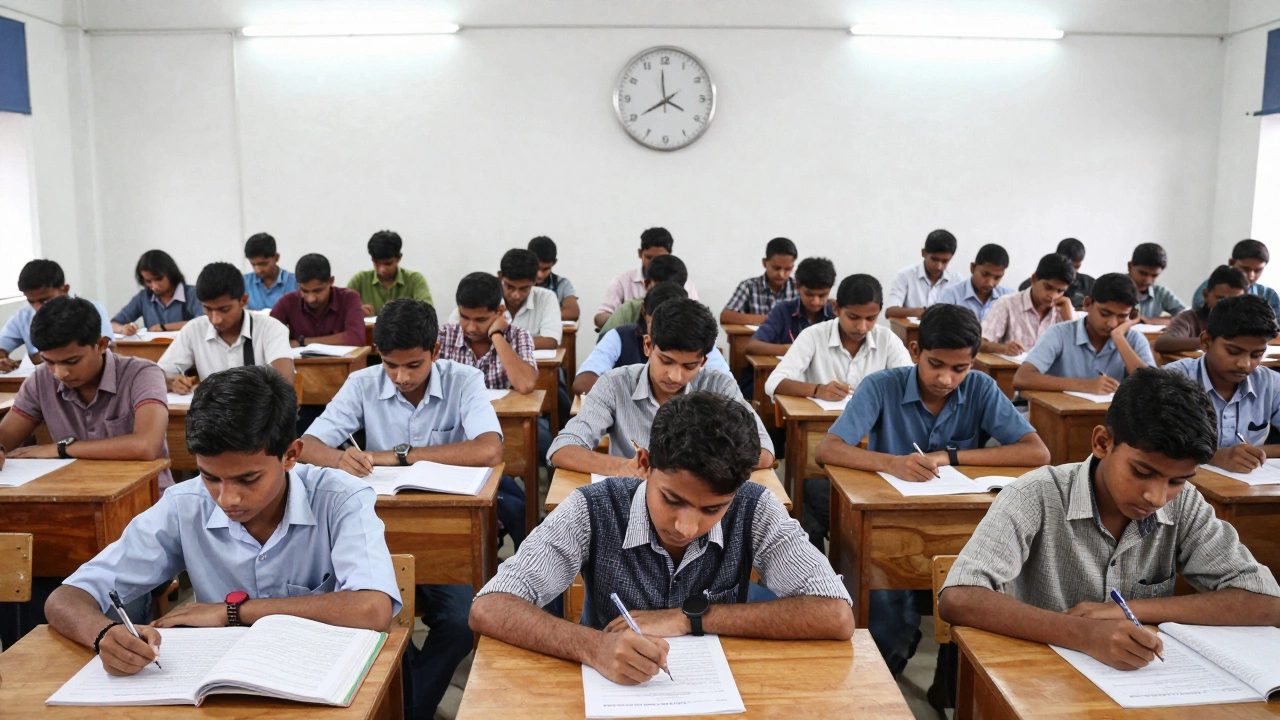
Which Personality Type Has the Strongest Competitive Drive for Competitive Exams?

Competitive Exam Personality Quiz
How competitive is your exam mindset?
Discover which personality traits give you an edge in competitive exams and learn how to leverage them effectively.
Question 1
When you fail a mock test, your immediate thought is usually:
Question 2
During study sessions, you find yourself:
Question 3
You measure your progress by:
Question 4
When preparing for exams, you prefer:
Question 5
Your motivation to study comes from:
Your Personality Profile
Key Traits
Competitive Edge Score
Ever watched someone crush a competitive exam while others burn out halfway? It’s not always about how hard they studied. Sometimes, it’s about who they are. The most competitive spirit doesn’t come from cramming 18-hour days or buying the latest prep books. It comes from a quiet, stubborn kind of person-one who sees every question as a challenge and every failure as a setup for the next win.
What Makes Someone Truly Competitive in Exams?
Competitive exams like NEET, IIT JEE, UPSC, or even GRE aren’t just tests of knowledge. They’re endurance races with thousands running the same track. The winner isn’t always the smartest. It’s the one who keeps going when others quit. So what’s the hidden trait that separates them?
Research from the University of Melbourne’s psychology department tracked over 1,200 students preparing for national-level exams over three years. The ones who consistently ranked in the top 5% shared one thing: they didn’t just want to pass-they needed to outperform. Not to impress parents or teachers. But because losing felt like a personal betrayal.
This isn’t about arrogance. It’s about identity. These students didn’t say, “I’m studying for the exam.” They said, “I’m someone who wins exams.” That shift in self-perception changes everything.
The Type That Doesn’t Quit: High Conscientiousness, Low Fear of Failure
Psychologists break personality into five big traits: Openness, Conscientiousness, Extraversion, Agreeableness, and Neuroticism. For competitive exams, the winning combo isn’t the loudest or the most creative. It’s high conscientiousness paired with low neuroticism.
High conscientiousness means you plan ahead, stick to schedules, and finish what you start. You don’t skip practice tests because you’re tired. You don’t delay revision because “tomorrow’s better.” You show up-even when you don’t feel like it.
But here’s the twist: the most competitive aren’t just disciplined. They’re emotionally resilient. They don’t panic after a bad mock test. They don’t spiral into self-doubt. They look at the score, spot the mistake, and move on. Their brain doesn’t treat failure as a reflection of worth. It treats it as data.
One IIT JEE topper from Delhi told me: “I failed my first mock three times. Each time, I didn’t think, ‘I’m not good enough.’ I thought, ‘What did I miss?’ That’s the difference.”
Why Extraverts Don’t Always Win
You’d think the outgoing, confident types would dominate. But in exam settings, extraversion often backfires. The loud, social students get distracted by group chats, peer pressure, or the need to appear “on top.” They study in groups because they hate being alone-but end up wasting hours debating opinions instead of solving problems.
Meanwhile, the quiet ones? They’re not shy. They’re focused. They don’t need validation from others. Their motivation comes from within. They don’t post their study hours on Instagram. They don’t need to. Their only audience is the next question on the paper.
One UPSC aspirant from Hyderabad studied for 18 months without telling a single friend. She didn’t post updates. Didn’t ask for encouragement. When she cleared the exam, her family found out from the official result list. That’s not isolation. That’s intentionality.

The Hidden Cost of Being Too Competitive
But here’s something no one talks about: the most competitive people are also the most likely to burn out. Because they tie their self-worth to results. When they don’t get the rank they wanted, they don’t just feel disappointed-they feel broken.
There’s a fine line between drive and obsession. The difference? One builds resilience. The other breaks it.
Students who thrive long-term don’t just chase ranks. They chase growth. They track progress, not just scores. They ask: “Did I understand this concept better than last week?” Not “Did I beat my friend?”
One coach from Bangalore told me: “I’ve seen students crack IIT after three attempts. And I’ve seen students crack it on the first try and never recover from the pressure. The ones who last are the ones who compete with their past selves, not others.”
How to Build a Competitive Mindset (Even If You’re Not Naturally Like That)
You don’t have to be born with this mindset. You can build it. Here’s how:
- Start small and win often. Set daily goals you can hit-solve 10 problems, finish one chapter, review one formula. Winning small builds confidence.
- Track progress, not rankings. Keep a simple journal: “Today I got 8/10 on thermodynamics. Last week I got 5/10.” That’s real competition.
- Remove comparison traps. Unfollow people who post “I studied 16 hours today.” Their journey isn’t yours.
- Reframe failure. Instead of “I failed,” say “I learned what not to do.”
- Build routines, not motivation. Motivation fades. Routines don’t. Show up at the same time, same place, same ritual-even on bad days.
The goal isn’t to become someone else. It’s to become the version of you that doesn’t quit.

Who Really Wins? The Quiet Ones With a Fire Inside
The most competitive spirit isn’t loud. It doesn’t post memes about “hustle culture.” It doesn’t brag about sleepless nights. It’s the student who wakes up at 5 a.m. without an alarm, solves problems while eating breakfast, and reviews mistakes before bed-quietly, consistently, without fanfare.
They don’t need applause. They don’t need to prove anything to anyone. They just need to know they gave everything. And that’s the quiet power behind every top ranker.
If you’re preparing for a competitive exam right now, ask yourself: Are you studying to beat others? Or to become someone who doesn’t give up?
The answer will tell you everything you need to know.
Is a competitive personality necessary to crack competitive exams?
No, but it helps. Many people pass exams without being fiercely competitive. What matters more is consistency, discipline, and emotional resilience. You can succeed by being steady, not by being aggressive. The most successful candidates aren’t always the most driven-they’re the most reliable.
Can someone change their personality to become more competitive?
You can’t change your core personality overnight, but you can build competitive habits. Focus on small wins, track progress, and create routines that reward persistence. Over time, these behaviors shape how you see yourself. You don’t need to be born competitive-you can become someone who acts like it, until it becomes who you are.
Do introverts have an advantage in competitive exams?
Yes, often. Introverts tend to focus better, avoid distractions, and prefer deep work over social validation. They’re less likely to get caught up in peer pressure or comparison. That doesn’t mean they’re shy-they’re just wired to thrive in solitude, which is exactly what exam prep requires.
What’s the biggest mistake competitive students make?
They equate effort with results. Studying 12 hours doesn’t guarantee success if you’re not learning. Many burn out because they measure progress by hours logged, not by understanding gained. Quality beats quantity every time.
Is it healthy to be this competitive?
Only if you keep it in check. Healthy competition pushes you to improve. Unhealthy competition makes you fear failure so much that you avoid risks, freeze under pressure, or lose your sense of self-worth. The goal isn’t to win every time-it’s to keep growing, even when you lose.
Next Steps: How to Start Today
If you’re serious about building a competitive mindset, start with one thing: write down your last exam score. Then write down what you want your next score to be. Not the rank. Not the percentile. Just the number.
Now, write down one small thing you can do every day to close that gap. Solve one extra problem. Review one topic you skipped. Sleep 30 minutes earlier.
Do that for 21 days. Then check your progress. You won’t be the loudest person in the room. But you’ll be the one who shows up. And that’s how winners are made.