Is 50 Too Late for an MBA? Real Answers for Career Changers

MBA Eligibility Calculator for Career Changers
Assess your eligibility for Executive MBA programs based on your current situation. This tool is designed specifically for professionals over 50 considering a career transition or advancement.
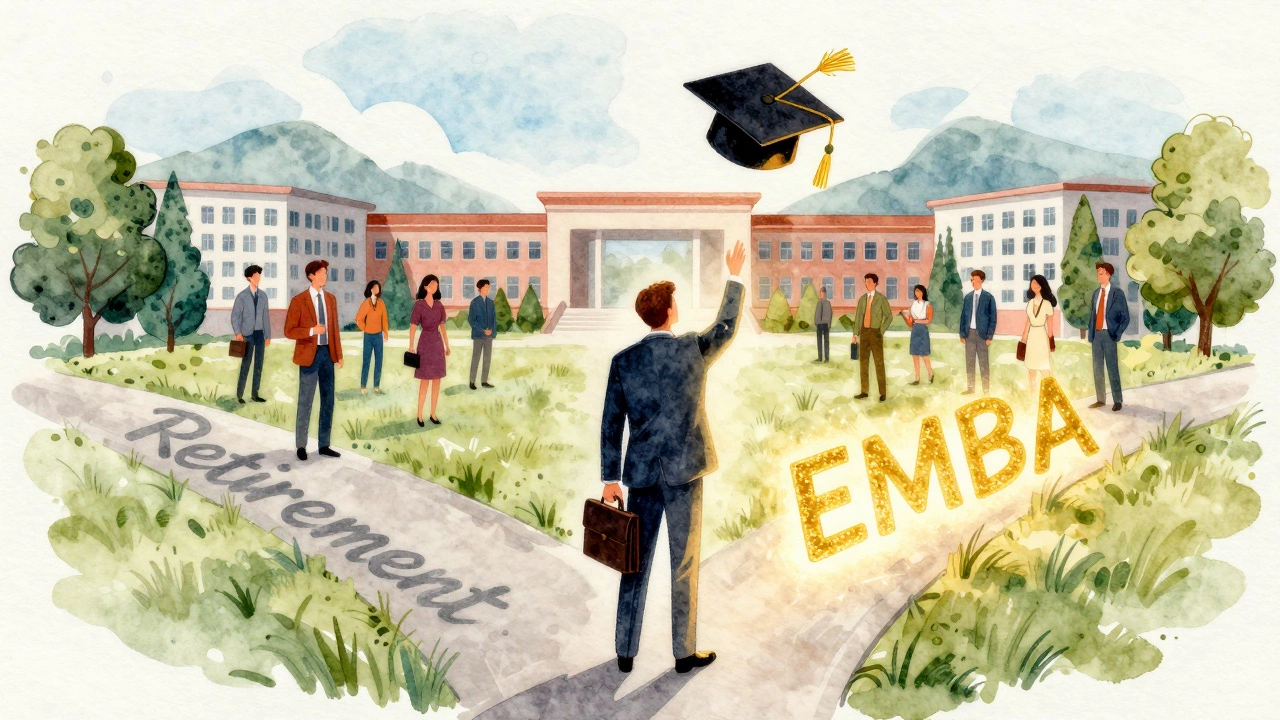
At 50, you’ve built a career, raised a family, maybe even sold a business or retired from a long job. Now you’re wondering: is it too late to go back to school for an MBA? The answer isn’t a simple yes or no. It’s about your goals, your resources, and what you want next - not your birth year.
You’re not the first person to do this
More than 15% of students in top U.S. executive MBA programs are over 50. At INSEAD, the average age of participants in their Executive MBA program is 39, but 12% are 50 or older. At Kellogg, a quarter of their Executive MBA class in 2024 had over 25 years of work experience. These aren’t outliers. They’re professionals who saw a gap - maybe they wanted to lead differently, pivot into consulting, start a nonprofit, or take over a family business - and decided to fill it.Why age isn’t the real barrier
The biggest hurdle isn’t your age. It’s your mindset. If you think an MBA is for young grads climbing the ladder, you’re thinking about the wrong program. The Executive MBA (EMBA) was built for people like you. These programs run evenings and weekends. They don’t require you to quit your job. They value your experience as much as your test scores.At 50, you bring something no 25-year-old can: real-world decisions under pressure, managing teams through crises, negotiating deals that actually closed. Schools know this. They actively recruit older applicants because you add depth to classroom discussions. Professors don’t just want theory - they want someone who’s lived it.
What you’ll actually learn - and what you won’t
An MBA at 50 isn’t about learning how to code or memorizing accounting formulas. You already know how to manage budgets, lead meetings, and read financial statements. What you’ll learn is how to think differently.You’ll study behavioral economics and understand why employees resist change. You’ll explore global supply chains and see how geopolitical risks affect your industry. You’ll analyze case studies from companies like LEGO and Netflix - not to memorize their strategies, but to see how leaders made hard calls with incomplete data.
And you’ll get a new network. Not the kind made of LinkedIn connections. The kind made over coffee after class, during group projects, or at alumni dinners. These are people who’ve been where you are - and they’re looking for partners, mentors, or even co-founders.
The financial reality check
Yes, an MBA costs money. Top programs can run $100,000 or more. But here’s what most people miss: you don’t need to pay full price.Many companies offer tuition reimbursement for EMBA students - even if you’re 50. If you’re still working, ask HR. If you’re self-employed, look into SBA loans or employer-sponsored programs. Some schools, like Columbia and Wharton, offer need-based scholarships specifically for mid-career professionals. At Duke’s Fuqua School, 38% of EMBA students received financial aid in 2024, with average awards covering 25% of tuition.
And think about ROI differently. At 50, you’re not trying to double your salary. You’re trying to extend your career, gain flexibility, or transition into something meaningful. That’s worth more than a paycheck. A 2023 survey by the Graduate Management Admission Council found that 72% of MBA graduates over 50 reported higher job satisfaction after graduation - even if their income didn’t spike.
What programs are right for you
Not all MBAs are created equal. If you’re 50 and still working, avoid full-time programs. They’re designed for people who can take two years off. Look instead for:- Executive MBA (EMBA) - Classes on weekends or one day a week. Designed for senior professionals.
- Part-time MBA - Spread over 3-4 years. Good if you want to go slower.
- Online MBA with residency - Hybrid models let you learn remotely but still build connections through short on-campus sessions.
Programs like MIT Sloan’s Leaders for Global Operations, UC Berkeley’s Haas EMBA, and the University of Texas at Austin’s EMBA are known for attracting older students. They don’t ask for GMAT scores from applicants with 20+ years of experience. They look at your impact, not your GPA.
What you’ll gain beyond the degree
The diploma matters less than what happens while you’re in it.You’ll learn to speak the language of innovation. You’ll understand how venture capitalists think. You’ll get feedback from peers who run tech startups, hospitals, and manufacturing plants. You’ll see how other industries solve problems - and bring those ideas back to your own.
And you’ll rediscover what it feels like to be a student. Not the kind who’s cramming for exams. The kind who’s curious again. Who asks questions without fear. Who reads a book and says, “I didn’t know that.” That kind of learning doesn’t have an expiration date.

When it might not be the right move
An MBA isn’t a magic fix. If you’re looking for a quick promotion or a way to escape burnout, it won’t help. If you’re unsure what you want to do next, the degree won’t give you clarity.Ask yourself:
- Do I have a clear goal - like moving into board advisory, launching a social enterprise, or transitioning to a new industry?
- Can I afford the time, even if not the money?
- Am I ready to be a beginner again - in a room full of people half my age?
If the answer to any of those is no, wait. Or find another path. Maybe a certificate program in strategic leadership or a fellowship in nonprofit management is a better fit.
Real stories, not theory
Maria, 52, was a regional director for a logistics company. After 28 years, she wanted to start her own supply chain consulting firm. She enrolled in an EMBA program. She didn’t change jobs. She didn’t quit. She used her class projects to build a business plan. Two years later, she launched her firm. Her first client? Her old employer.James, 54, retired from the military and wanted to work in healthcare administration. He had no business background. He took an online MBA while volunteering at a local clinic. He graduated with a focus on health policy. Now he’s the director of operations for a community health network.
These aren’t rare cases. They’re becoming the norm.
What to do next
If you’re seriously considering an MBA at 50:- Identify your goal. What exactly do you want to do after the degree?
- Research EMBA programs that welcome older students. Look for class profiles - not rankings.
- Reach out to alumni over 50. Ask them what surprised them. Most are happy to talk.
- Visit a class. Many schools let you sit in for a day. See how the energy feels.
- Don’t wait for the perfect moment. There won’t be one.
Age doesn’t make you too late. It makes you qualified.
Is 50 too old for an MBA?
No, 50 is not too old for an MBA. Many top programs have active students in their 50s and even 60s. Executive MBA programs are specifically designed for experienced professionals, and schools value the leadership experience older applicants bring. The average age in EMBA programs is around 39, but 10-15% of students are over 50.
Do MBA programs accept older applicants?
Yes, and they actively seek them. Programs like Kellogg, INSEAD, and Wharton prioritize diversity in experience, not just age. Admissions committees look for candidates who can contribute real-world insights to class discussions. If you have 20+ years of leadership experience, you’re an asset - not a liability.
Can I afford an MBA at 50?
Many people assume they can’t afford it, but options exist. Employers often cover tuition for EMBA students. Some schools offer scholarships for mid-career professionals. SBA loans and payment plans are also available. The key is shifting your mindset: you’re not paying for a salary boost - you’re investing in your next chapter, which could last 10-20 more years.
What’s the best MBA format for someone over 50?
Executive MBA (EMBA) programs are the best fit. They’re designed for working professionals, with classes on weekends or one day a week. Part-time and online MBAs with short residencies are also good options. Avoid full-time programs unless you’re prepared to step away from your career and income for two years.
Will an MBA help me change careers at 50?
Yes - if you have a clear target. An MBA won’t magically land you a job in tech or finance, but it gives you the framework, network, and credibility to make that shift. Many graduates over 50 transition into consulting, nonprofit leadership, board roles, or entrepreneurship. The degree opens doors; your experience gets you through them.
Do I need to take the GMAT if I’m over 50?
Not always. Many EMBA programs waive the GMAT for applicants with 15+ years of leadership experience. Schools focus more on your work impact, recommendations, and interview performance. Always check the specific program’s policy - some may still require it, but waivers are common for experienced professionals.