The Biggest Problem With E-Learning: Why Engagement Fails and How to Fix It

E-Learning Engagement & Retention Calculator
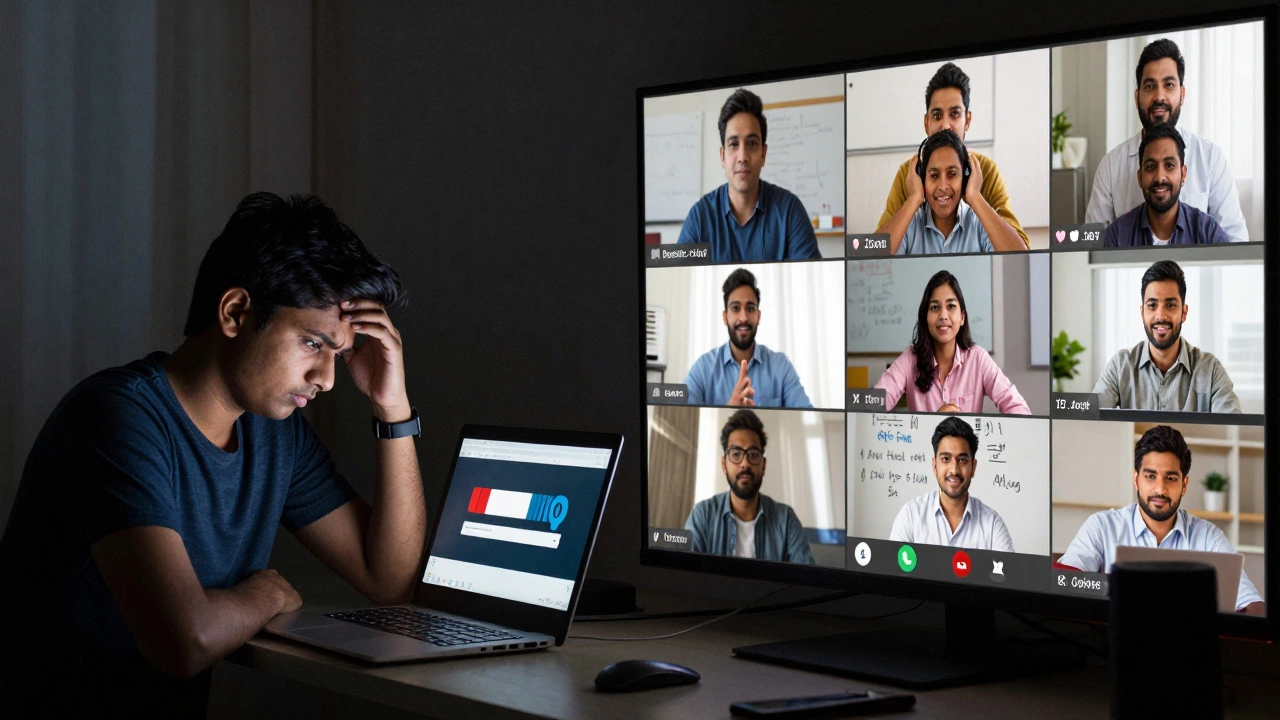
Imagine sitting in a dark room at 2 AM, staring at a screen that has been paused for forty-five minutes. You’re supposed to be learning Python or mastering public speaking, but your mind is wandering to the grocery list you forgot to make. This isn’t just laziness; it is the single biggest problem with e-learning is the delivery of educational content through electronic media, primarily over the internet. The core issue is not the technology itself, but the profound lack of social accountability and immediate feedback loops that keep traditional students on track.
We often hear that online education offers freedom and flexibility. And it does. But that same freedom is exactly what kills retention rates. Without a physical classroom forcing you to show up, without a professor’s gaze reminding you to participate, and without peers debating ideas in real-time, the barrier to quitting becomes almost non-existent. If you are struggling to finish courses or feeling disconnected from the material, you are not alone. Let’s break down why this happens and how to actually beat the odds.
The Isolation Trap: Why Loneliness Kills Learning
The most significant hurdle in digital education is social isolation. In a brick-and-mortar university, learning is a communal activity. You complain about homework with friends, form study groups, and bounce ideas off classmates during breaks. These interactions create a web of support that holds you accountable.
In the world of online learning platforms like Coursera, Udemy, or LinkedIn Learning, you are often just one name among thousands. The comment sections can feel sterile, and discussion forums are frequently dead zones where questions go unanswered for days. When you hit a confusing concept in a video lecture, there is no hand to raise. There is only a chat box that might never get a reply. This silence creates a psychological distance between the learner and the material, making it easy to disengage when things get tough.
This isolation leads to what educators call "transactional learning." You treat the course like a product you bought-watch the videos, get the certificate, done. You miss out on the deeper, transformative aspects of education that come from collaboration and debate. To combat this, you have to artificially recreate community. Join Discord servers related to your course topic, find an accountability partner, or post progress updates on social media. Make your learning visible to others so they can hold you responsible.
The Discipline Deficit: Flexibility as a Double-Edged Sword
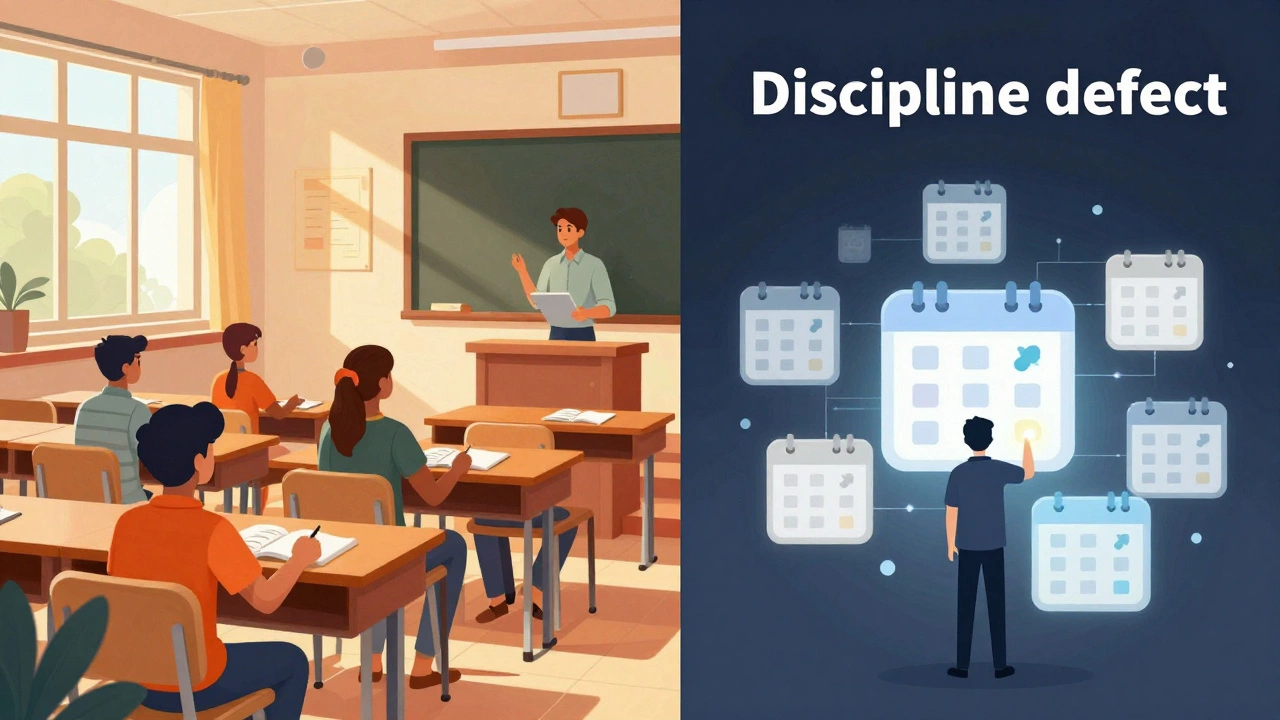
Flexibility is the main selling point of remote study. You can learn at midnight, during lunch, or while commuting. However, human beings are creatures of habit and external structure. When you remove the rigid schedule of 9-to-5 classes, you place the entire burden of time management on yourself. Most people are terrible at self-regulation.
Research consistently shows that adult learners struggle with procrastination more in online settings than in face-to-face ones. Why? Because the consequences of missing a class are invisible. In a physical school, skipping class means you sit empty-handed in front of confused peers. Online, you just close the tab. No one knows. No one cares. This lack of immediate negative reinforcement allows bad habits to spiral. One missed day turns into a week, then a month, and suddenly the course is expired.
To fix this, you must impose artificial structure. Treat your online course like a paid job. Block out specific hours in your calendar for studying. Use tools like Pomodoro timers to break work into manageable twenty-five-minute chunks. If you don't build these guardrails, the very flexibility that attracted you will become the reason you fail.
Technical Barriers and Digital Fatigue
Let’s talk about the unglamorous reality: technology fails. While we assume everyone has high-speed internet and a modern laptop, this is not true globally or even locally. A dropped connection during a live webinar can cause frustration that derails focus for hours. Poor audio quality in pre-recorded lectures forces you to re-watch segments multiple times, draining your patience and energy.
Beyond hardware, there is the issue of cognitive load. We spend our entire workday staring at screens for emails, Slack messages, and Zoom meetings. By the time evening comes, our brains are fried. Asking someone to engage in deep, complex learning after eight hours of screen time is asking them to run a marathon after a full day of standing still. This phenomenon, known as digital fatigue, significantly reduces information retention.
If you are experiencing burnout, switch mediums. Download audiobooks or podcasts related to your course. Take notes by hand instead of typing. Step away from the screen whenever possible. Your brain needs variety to stay engaged. Don't let the medium dictate the method; adapt the method to fit your mental energy levels.

Quality Control: The Wild West of Content
Anyone with a microphone and a webcam can create a course today. This democratization of knowledge is wonderful, but it also means there is zero gatekeeping. Unlike accredited universities where curricula are reviewed by academic boards, many online courses are created by industry experts who may be great practitioners but terrible teachers.
You might pay $100 for a course on graphic design, only to find the instructor skips foundational theory and jumps straight into advanced tricks without explanation. Or worse, the content is outdated. In fast-moving fields like coding or digital marketing, a course recorded three years ago might teach deprecated methods. Students waste time learning skills that are no longer relevant, leading to frustration and a sense of wasted investment.
Before enrolling, dig deep. Look beyond the sales page. Check the review dates-are recent reviews positive? Look for sample lessons to gauge teaching style. Ask yourself: Does this instructor explain *why* something works, or just *how*? Prioritize courses with active communities and regular updates. Quality matters more than price in the long run.
| Factor | Traditional Classroom | E-Learning |
|---|---|---|
| Accountability | High (peer/professor pressure) | Low (self-driven only) |
| Social Interaction | Immediate and organic | Digital and often delayed |
| Cost Barrier | High (tuition, housing, transport) | Low to Medium (subscription fees) |
| Flexibility | Rigid schedules | Self-paced |
| Content Freshness | Slow to update | Variable (depends on creator) |
Mitigating the Risks: Strategies for Success
Acknowledging these problems is the first step. The second is building a system that works around them. Here is how top performers navigate the pitfalls of online education:
- Create a Dedicated Space: Never study in bed or on the couch. Designate a desk or corner as your "learning zone." When you sit there, your brain switches into study mode. Physical environment cues mental state.
- Batch Your Learning: Instead of watching one video a day, watch three on Sunday. Deep work requires sustained attention. Fragmented learning leads to fragmented understanding.
- Apply Immediately: Passive watching is the enemy. After every lesson, do something. Code the example, write the essay, draw the diagram. Active recall cements memory far better than re-watching videos.
- Seek External Validation: Build projects based on what you learn. Share them on GitHub, LinkedIn, or personal blogs. Public commitment increases completion rates because your reputation is on the line.
E-learning is not inherently flawed. It is simply different. It demands more maturity, more discipline, and more intentionality than traditional schooling. If you approach it as a passive spectator, you will fail. If you approach it as an active architect of your own education, you will thrive. The biggest problem isn't the platform; it's the mindset. Change the mindset, and the results will follow.
Is e-learning less effective than traditional classroom learning?
Not necessarily. Studies show that e-learning can be equally or more effective if it includes interactive elements and consistent feedback. The key difference is that e-learning requires higher self-discipline. For self-motivated learners, online formats often allow for faster pacing and deeper customization, whereas traditional classrooms move at a fixed speed that may be too slow or too fast for some individuals.
How can I stay motivated when studying online alone?
Motivation fades, so rely on systems instead. Create a strict schedule, join online study groups or Discord communities related to your course, and set small, achievable milestones. Reward yourself after completing modules. Also, try to connect with at least one peer who is taking the same course to check in with weekly. Social accountability is the strongest antidote to isolation.
What should I look for to ensure an online course is high-quality?
Check for recent reviews (within the last 6-12 months) to ensure content hasn't become outdated. Look for instructors who provide downloadable resources, quizzes, and practical projects rather than just video lectures. Verify if the platform offers a money-back guarantee. Finally, preview the first few lessons to assess the instructor's teaching clarity and audio/video quality before committing.
Can I really learn technical skills like coding entirely online?
Yes, absolutely. Many successful developers are self-taught through online resources. Coding is a skill that benefits greatly from hands-on practice, which can be done remotely using free tools like VS Code and GitHub. The challenge lies in debugging complex issues without immediate help, so joining developer communities and forums is crucial for overcoming roadblocks.
Why do I feel tired after just one hour of online studying?
This is likely digital eye strain and cognitive overload. Staring at a screen reduces blink rate, causing physical fatigue, while processing new information digitally taxes your working memory. Try the 20-20-20 rule: every 20 minutes, look at something 20 feet away for 20 seconds. Additionally, take physical breaks to stretch and hydrate. Switching to audio-based learning or reading textbooks can also give your eyes a rest.