What Is the Salary of an MBBS Doctor in India?
MBBS Doctor Salary Calculator
Estimate Your Monthly Income
Estimated Monthly Salary
After clearing NEET and finishing five and a half years of MBBS, many students ask one question: How much will I actually earn? The answer isn’t simple. A fresh MBBS graduate in India doesn’t start with a six-figure salary. But the path to a stable, growing income is clear-if you know where to look.
Starting Salary: Fresh MBBS Graduates
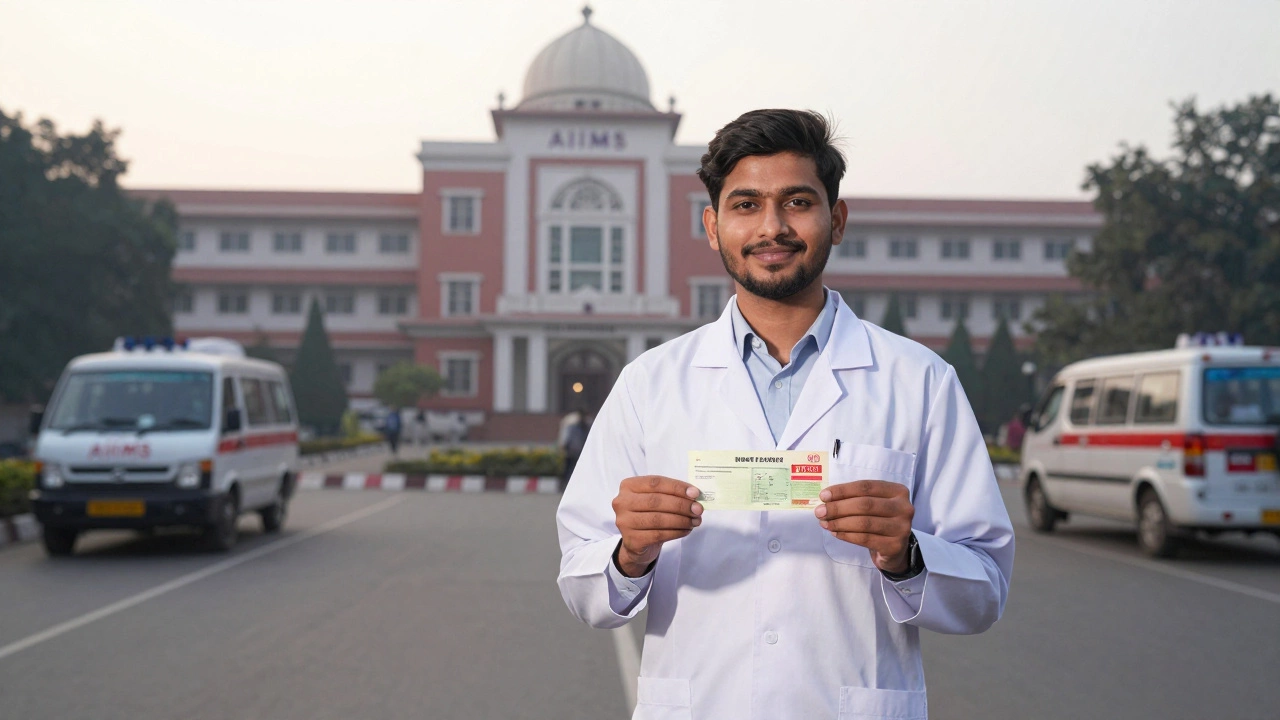
Right after graduation, most MBBS doctors enter government service through state-level exams or join as junior residents in hospitals. In government hospitals, the starting pay is set by the 7th Pay Commission. A junior resident in a central government hospital like AIIMS or PGIMER earns around ₹70,000 to ₹80,000 per month. That includes basic pay, allowances, and house rent. In state government hospitals, the pay ranges from ₹50,000 to ₹65,000, depending on the state’s budget and location.
Private hospitals pay less at first. A fresh MBBS graduate working as a house officer in a private hospital in Delhi or Mumbai might earn ₹30,000 to ₹45,000. Some small clinics or rural private setups pay as low as ₹20,000. The catch? These jobs rarely offer benefits like health insurance, paid leave, or provident fund. Government jobs win here-not just in pay, but in security.
Post-Graduation: The Real Pay Jump
MBBS is just the entry ticket. Most doctors don’t stay at this level. They go for MD, MS, or diploma courses in specialties like Pediatrics, Surgery, or Radiology. That’s when salaries climb.
A postgraduate doctor (MD/MS) in a government hospital earns ₹1,00,000 to ₹1,40,000 per month. In top institutions like AIIMS, Delhi, or CMC Vellore, the pay can go up to ₹1,60,000 with extra allowances. In private hospitals, specialists start at ₹80,000 to ₹1,20,000. But here’s the twist: private hospitals often pay more if you bring in patients. Surgeons and dermatologists with strong referral networks can earn ₹2,00,000+ within a few years.
Doctors who do super-specializations like DM (Neurology, Cardiology) or MCh (Neurosurgery, Plastic Surgery) can hit ₹2,50,000 to ₹4,00,000 per month in big cities. These roles are rare-only 10% of MBBS graduates make it this far-but they’re the ones who make headlines.
Government vs Private: The Big Divide
The difference between government and private sector pay isn’t just in numbers-it’s in stability.
Government doctors get fixed salaries, pensions, medical benefits, and job security. Even after retirement, they get a pension of 50% of their last drawn salary. They work fixed hours, rarely get called at 2 a.m., and have predictable workloads. In states like Tamil Nadu, Kerala, or Karnataka, government doctors also get free housing and transport allowances.
Private doctors earn more on paper-but only if they hustle. In a corporate hospital like Apollo or Fortis, a senior consultant might earn ₹1,50,000 to ₹3,00,000. But that’s after 8-10 years of work, long shifts, weekend duties, and pressure to meet targets. Many private doctors run their own clinics on the side. One orthopedic surgeon in Hyderabad told me he earns ₹2 lakh from his hospital job, but another ₹3 lakh from his clinic on weekends.
There’s also a rural-urban gap. Government doctors posted in rural areas get extra incentives-up to ₹20,000 extra per month in some states. But many avoid these postings because of poor infrastructure, lack of family support, and isolation. The government is trying to fix this with bond schemes: if you take a government job, you must serve for 3-5 years in rural areas or repay the training cost.

Private Practice: The Long Game
Many MBBS doctors dream of opening their own clinic. It sounds glamorous-but it’s risky. Setting up a clinic in a Tier-2 city like Indore or Coimbatore costs ₹15-25 lakhs. You need equipment, staff, licenses, and marketing. Most doctors don’t break even for 2-3 years.
But once they do, the returns are high. A general physician in a small town can earn ₹80,000-₹1,50,000 monthly after three years. A dermatologist or gynecologist in a busy city can pull in ₹3-5 lakhs per month. One ENT specialist in Lucknow told me he sees 40-50 patients a day. At ₹800-1,200 per visit, that’s ₹30-40 lakhs a year. No employer. No boss. Just hard work and reputation.
The catch? You need patients. That’s why many MBBS graduates start by working in hospitals first-building a name, learning how to manage a clinic, and saving money before going solo.
Doctors in Public Health and Research
Not all MBBS doctors work in hospitals. Some join public health departments, NGOs, or research institutes. The pay here is lower-₹40,000 to ₹70,000-but the work is meaningful. Doctors working with WHO, UNICEF, or state health missions get international exposure and sometimes foreign funding. Others join medical colleges as lecturers. A junior faculty member in a government medical college earns ₹60,000-₹90,000 and gets time for research and further studies.
Those who pursue Ph.D. or join institutions like ICMR or CSIR can earn ₹80,000-₹1,20,000 as senior researchers. It’s not the fastest path to wealth, but it’s stable and respected.
What About Doctors Abroad?
Many MBBS graduates consider moving abroad. The U.S., UK, Australia, and Canada pay far more. A doctor in the U.S. can earn $100,000-$250,000 annually. But the cost is high: you need to pass USMLE, get a visa, and work for years to get licensed. Many spend 5-7 years and ₹20-30 lakhs just to qualify.
Some doctors go to Gulf countries like UAE or Saudi Arabia. There, they earn ₹1,50,000-₹3,00,000 per month tax-free. But the work culture is demanding, and family life is harder. Many return after 3-5 years because of burnout.
For most, staying in India makes sense-especially if they’re willing to work smart.
Real Talk: What Most Doctors Actually Earn
Let’s cut through the noise. Here’s what a typical MBBS doctor earns at different stages:
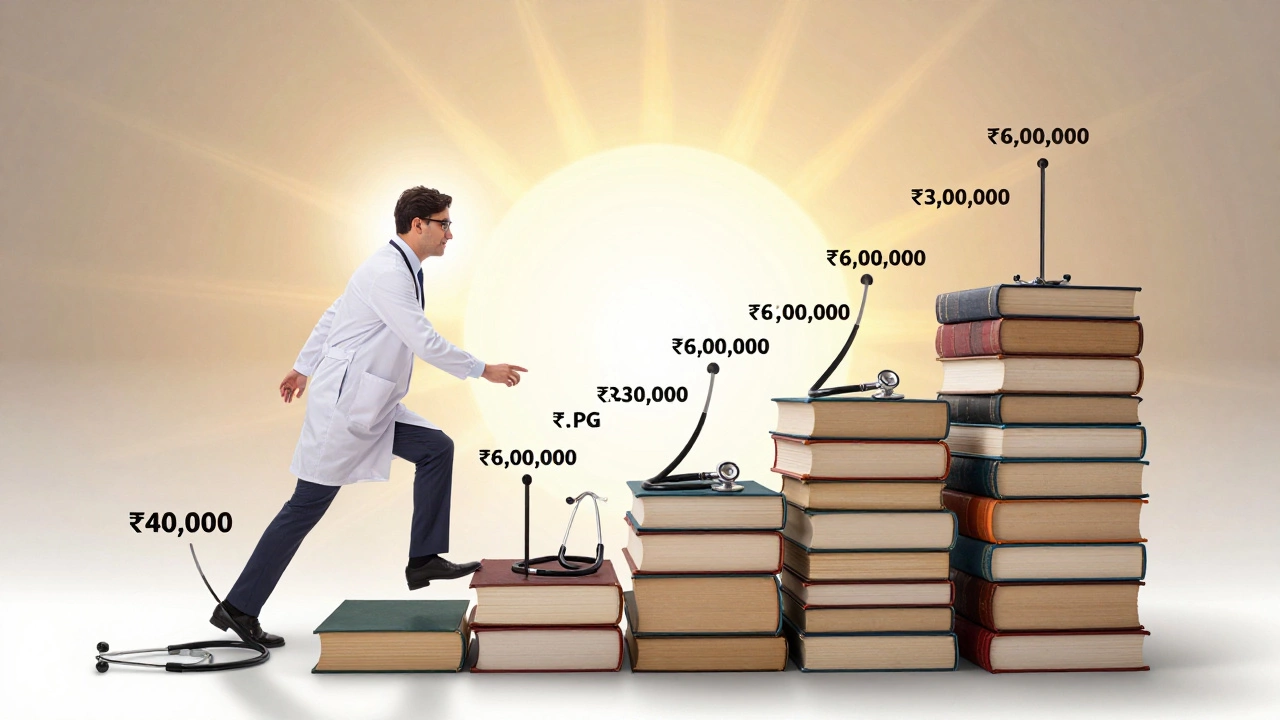
- Year 1-2 (Intern/Junior Resident): ₹40,000-₹80,000
- Year 3-5 (PG Resident): ₹70,000-₹1,40,000
- Year 6-10 (Specialist in Private Hospital): ₹1,00,000-₹2,50,000
- Year 10+ (Private Practice Owner): ₹2,00,000-₹6,00,000
- Government Specialist (after 10 years): ₹1,50,000-₹2,50,000 (with pension)
There’s no magic formula. Your salary depends on your specialty, location, work ethic, and whether you’re willing to work beyond the 9-to-5. A doctor in a small town with a good reputation can earn more than a specialist in a metro hospital who just clocks in.
Why NEET Coaching Matters
Getting into an MBBS program isn’t easy. Only 1 in 10 NEET aspirants clears it. And the top colleges-AIIMS, JIPMER, VMMC-have cutthroat competition. NEET coaching doesn’t just help you pass. It helps you get into a college that gives you better training, better internships, and better job opportunities.
Graduates from top medical colleges get placed faster, earn more in their first job, and have stronger networks. That early advantage compounds over time. A doctor from AIIMS doesn’t just get a better salary-they get access to research, fellowships, and global opportunities that others don’t.
So when you invest in NEET coaching, you’re not just paying for classes. You’re buying a shot at a career that can change your family’s financial future.