How to Get a Job in Local Government: A Step-by-Step Guide for 2025

Getting a job in local government isn’t about knowing the right person or luck. It’s about understanding how the system works, showing up with the right skills, and playing the long game. In Australia, local councils employ thousands of people every year - from engineers and planners to customer service officers and environmental officers. But competition is stiff, and most applicants don’t make it past the first screening. Here’s how to actually get hired.
Understand what local government actually does
Local government isn’t just about potholes and rubbish collection. It’s the backbone of community life. Councils manage parks, libraries, child care, waste services, building permits, animal control, local roads, emergency planning, and even cultural events. Each role connects directly to public wellbeing. If you think you’re applying for a "boring office job," you’re missing the point. The best candidates see this work as public service - not just a paycheck.Look at your local council’s website. Read their Corporate Plan or Strategic Community Plan. These documents list priorities like "increasing public transport access" or "reducing youth unemployment." If you can tie your experience or goals to those, you stand out immediately.
Know the job types - and which ones are easiest to break into
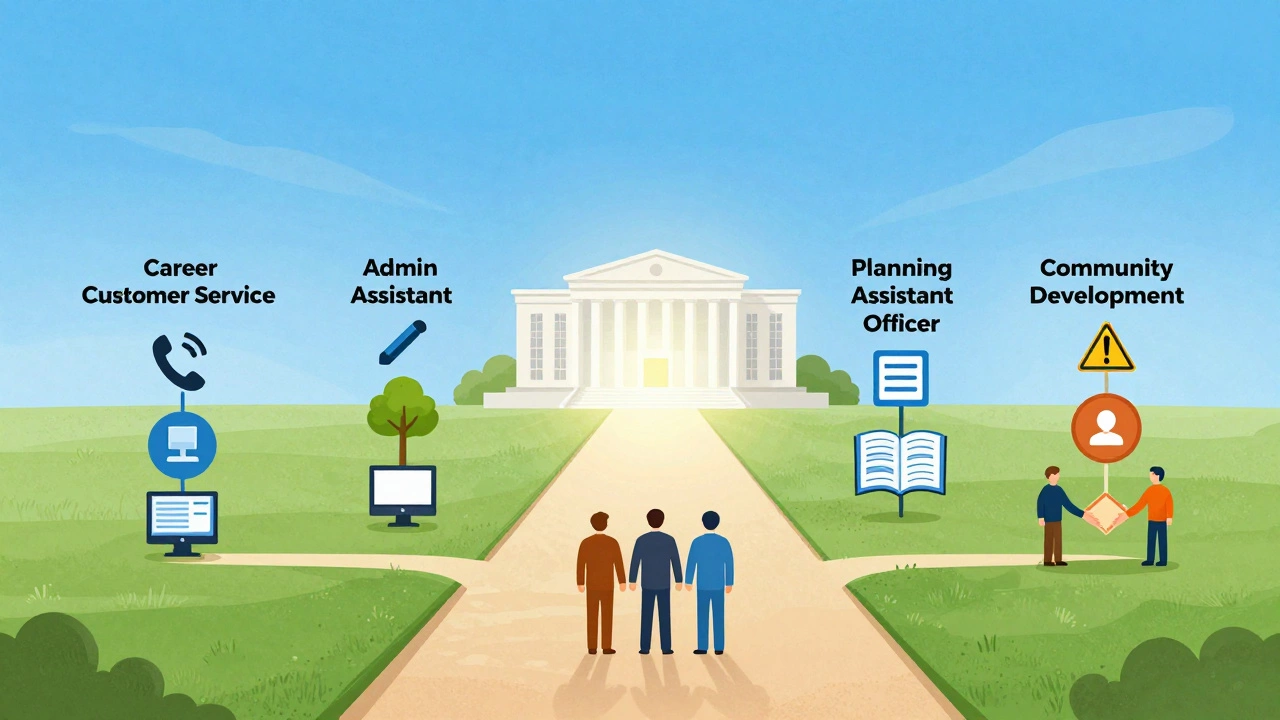
Not all local government roles are the same. Some require degrees. Others don’t. Here’s what’s realistically accessible in 2025:- Customer Service Officer - No degree needed. Basic computer skills and patience matter more than qualifications. These roles are the most common entry point.
- Administrative Assistant - Requires experience with Microsoft Office and document management systems. Often posted as "General Clerical" roles.
- Environmental Officer - Needs a Certificate III or IV in Environmental Health or similar. High demand due to sustainability targets.
- Planning Assistant - Usually requires a diploma in urban planning or related field. Less entry-level openings, but good for career growth.
- Community Development Officer - Looks for experience in youth work, aged care, or disability support. Strong preference for lived experience.
Start with Customer Service or Administrative roles. They’re the gateway. Over 60% of senior council staff began in these positions. They offer internal training, clear promotion paths, and exposure to other departments.
Find jobs - and don’t rely on job boards
You won’t find most local government jobs on Seek or Indeed. They’re posted on the council’s own website - often weeks before they’re listed elsewhere. Set up alerts on every council in your region. For Sydney, that’s 33 councils. It sounds like a lot, but you only need one job.Check these sources daily:
- Each council’s "Careers" or "Join Us" page
- The NSW Public Service Commission portal
- Local government association websites like LGNSW (Local Government NSW)
- LinkedIn - follow local councils and turn on job alerts
Many roles are filled internally before they’re advertised. If you know someone who works at a council, ask if they can notify you when a position opens. Networking isn’t cheating - it’s how the system works.
Build the right resume - no fluff, just proof
Your resume must pass a 30-second scan. Council HR teams review hundreds of applications. They’re looking for keywords from the job description. Copy and paste the exact phrases they use.Example: If the job says "experience in handling public inquiries," don’t write "helped people with questions." Write: "Handled over 500 public inquiries per month via phone and email, maintaining a 95% satisfaction rating."
Include:
- Specific numbers (how many people you served, how much you saved, how many processes you improved)
- Software you’ve used (CRM systems, council-specific databases like Civica or SAP)
- Any compliance training (Work Health and Safety, Privacy Act, Equal Opportunity)
Leave out hobbies, photos, or generic statements like "team player." Councils care about results, not personality tests.
Prepare for the assessment - it’s not an interview
Most local government jobs use a competency-based selection process. You’ll be asked to write responses to scenarios using the STAR method: Situation, Task, Action, Result.Example question: "Describe a time you dealt with a difficult member of the public. What did you do?"
Bad answer: "I stayed calm and helped them." Good answer: "During my role at a community centre, a resident became angry about a denied building permit. I listened without interrupting, explained the regulation they breached (Section 4.12 of the Environmental Planning Act), provided a written appeal process, and followed up in three days. The resident withdrew their complaint and later thanked me for the clarity."
Practice these responses out loud. Record yourself. Time each answer - they should be 90 to 120 seconds. Councils want clear, structured, calm answers. Emotion or drama hurts your score.
Get the right certifications - fast and cheap
You don’t need a university degree to start. But some certifications give you a real edge:- Work Health and Safety (WHS) Certificate I or II - Free or $50 through TAFE or community centres.
- First Aid Certificate - Required for many frontline roles. $120, valid for 3 years.
- Privacy and Information Management - Free online modules from NSW Government Learning Portal.
- Microsoft Office Specialist (MOS) Certification - Especially Excel and Word. Costs $100, but boosts your resume significantly.
These aren’t just nice-to-haves. They’re listed as "desirable" in over 70% of entry-level council job ads. Having them puts you ahead of 80% of applicants.
Apply like a pro - timing matters
Councils often close applications at 5 PM on the deadline day. Don’t wait. Submit at least 24 hours early. Late applications are automatically rejected - no exceptions.Also, tailor your cover letter. Don’t copy-paste. Mention the specific council, the job number, and one thing you admire about their recent project. Example: "I was impressed by your recent tree-planting initiative in Granville - I’d welcome the chance to support similar community greening efforts."
Don’t give up after rejection
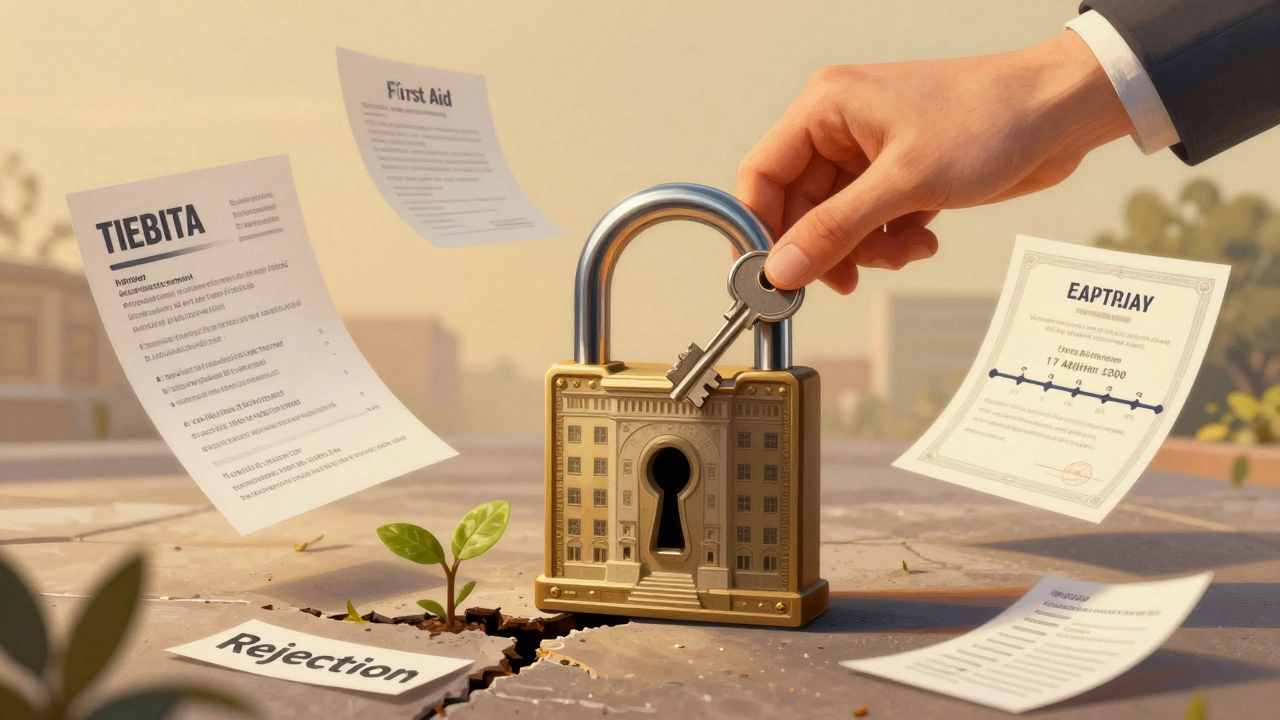
Rejection is normal. One applicant applied to 17 council jobs over 11 months before getting hired. They didn’t change their resume - they changed their strategy. After each rejection, they emailed the HR team and asked: "Could you give me one piece of feedback?"Seven of them replied. One said: "Your application was strong, but you didn’t mention your experience with council databases." So they took a free Civica training course online. The next application got an interview.
Every rejection is feedback. Use it.
What happens after you get hired
Your first year is about learning the system. Councils have strict rules around procurement, ethics, and public communication. You’ll get training - but you need to ask questions. Don’t pretend you know.After 12 months, look for internal transfers. Move from Customer Service to Planning, or from Admin to Environmental Health. Internal promotions are 5x more common than external hires. Stay long enough, and you’ll have a career - not just a job.
Do I need a degree to get a job in local government?
No, you don’t need a degree for most entry-level roles. Positions like Customer Service Officer or Administrative Assistant only require a high school certificate and basic computer skills. However, for technical roles like Planner, Engineer, or Environmental Health Officer, a diploma or degree is required. Start without a degree, then study part-time while working - many councils offer study leave and financial support.
How long does it take to get hired after applying?
The process usually takes 6 to 12 weeks. After the closing date, councils take 2-3 weeks to shortlist, then 3-4 weeks for interviews and assessments. The final decision and offer can take another 2-3 weeks. If you haven’t heard back after 8 weeks, it’s okay to politely follow up with the HR contact listed in the job ad.
Are local government jobs secure?
Yes. Local government jobs in Australia are among the most secure in the public sector. Most roles are permanent, with union protections, clear leave entitlements, and defined career paths. Budget cuts rarely affect frontline staff - councils prioritize essential services like waste, roads, and community safety. Even during economic downturns, hiring continues.
Can I apply if I’m not an Australian citizen?
Yes, you can apply if you have a valid work visa. However, some roles - especially those involving sensitive data, law enforcement, or policy development - require Australian citizenship. Always check the job ad for "Citizenship Required" or "Eligibility to Work in Australia". Most administrative and customer service roles are open to visa holders.
What’s the pay like for entry-level council jobs?
Entry-level roles like Customer Service Officer start at around $62,000-$68,000 per year in NSW, including superannuation. Administrative roles are similar. Pay increases with experience, qualifications, and internal promotions. Many councils also offer flexible hours, study support, and generous leave - making the total package very competitive.